
Michigan VINELink Coverage
MI-VINE means Victim Information Notification Everyday. The public Michigan VINELink portal combines a person search with registration for custody-event notices. A user selects Michigan, finds a matching record in a participating system, opens it, and chooses a notification route when registration is available. State materials also describe telephone, text, email, app, and TTY access.
The Michigan person-search screen presents the entry point for both lookup and notification registration.
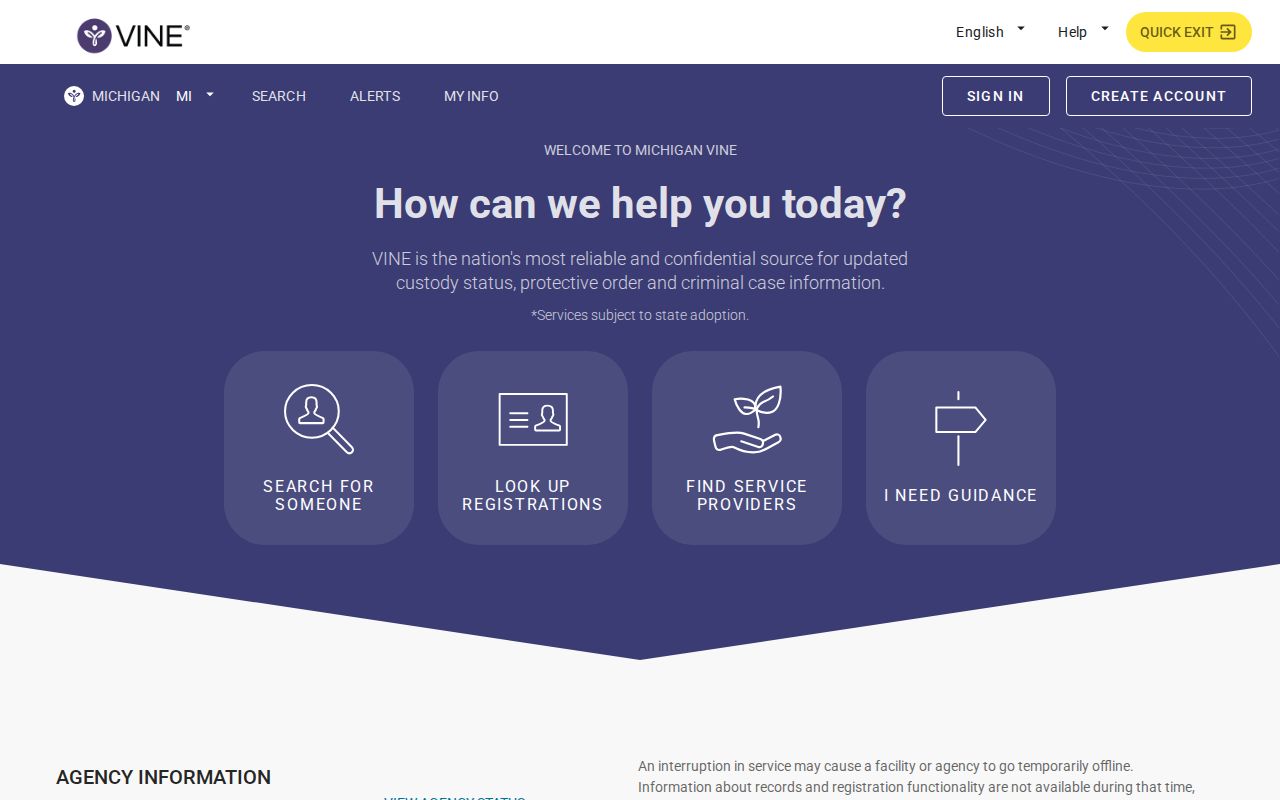
The available result and alert choices depend on the record supplied by the participating custody agency.
Coverage must be stated narrowly. Michigan court guidance describes people held in a participating county jail, not every Michigan jail by definition. MDOC cases can also appear through notification services, but OTIS remains the better public source for MDOC sentence fields, parole status, Date Paroled, and Date Discharged. Federal prison and immigration detention use different systems.
Search Michigan VINELink Records
Search one person at a time. Gather the full name, likely custody area, age or birth details, and an agency identifier if known. Multiple people can share a name. A photograph may help, but it should never replace matching the available identity and custody fields.
- Open VINELink and select Michigan as the state.
- Enter the person’s name or the identifier offered by the participating agency.
- Review each candidate and compare the displayed identity details.
- Open the correct record and read the custody status, location, and event text together.
- Use the registration option on that record if a future alert is needed.
A no-result can have several causes. The county may not participate, the record may not be uploaded yet, the name may differ, or the person may now be held by another authority. For a jail case, identify the physical sheriff facility through the Michigan County Directory. Ask that custodian about the current status or release record.
Note: Leaving a county roster may reflect transfer, a writ, hospitalization, another hold, escape, or death as well as release.
Michigan VINELink Release Fields
VINELink wording varies with the participating system and event. Treat the result as a point-in-time custody notice. It may identify the person, the supplying agency, a status, a location, or an event available for alerts. Do not assume every field appears in every Michigan record.
| Field or event | How to read it |
|---|---|
| Name and identifier | Tools for distinguishing the record from people with similar names. |
| Custody status | The participating agency’s current wording, which may change after an event is posted. |
| Facility or agency | The system supplying custody information, not always the arresting or sentencing county. |
| Release event | A notification that custody changed; it is not a certified release timestamp or full legal record. |
| Transfer or escape | A change that is distinct from community release. |
| Court or case event | An event offered by some participating systems, not a substitute for the court docket. |
“Released” in one system only resolves that system’s custody event. It does not prove that parole, probation, a warrant, another county hold, federal custody, or an immigration matter has ended. Confirm the next status with the agency named in the result.
Register Michigan Release Alerts
Registration attaches a delivery method to the selected person record. Michigan materials say event choices can include release, transfer, escape, court hearing, case status, and disposition, depending on the participating system. Register only after confirming the match. An alert tied to the wrong person cannot verify the person of interest.
- Open the correct Michigan VINELink result and choose “Register for Notifications” when it appears.
- Select the offered delivery method, such as telephone, text, email, app, or TTY.
- Choose the event types available for that record and enter the requested contact details.
- For telephone registration, create a four-digit PIN and keep it available to acknowledge the call.
- Complete confirmation and update the registration if the phone number or email address changes.
Email and text registration do not use the telephone PIN. The PIN confirms receipt of an automated phone alert. It does not unlock custody details or serve as an offender identifier.
The official MI-VINE information page describes Michigan’s notification routes.
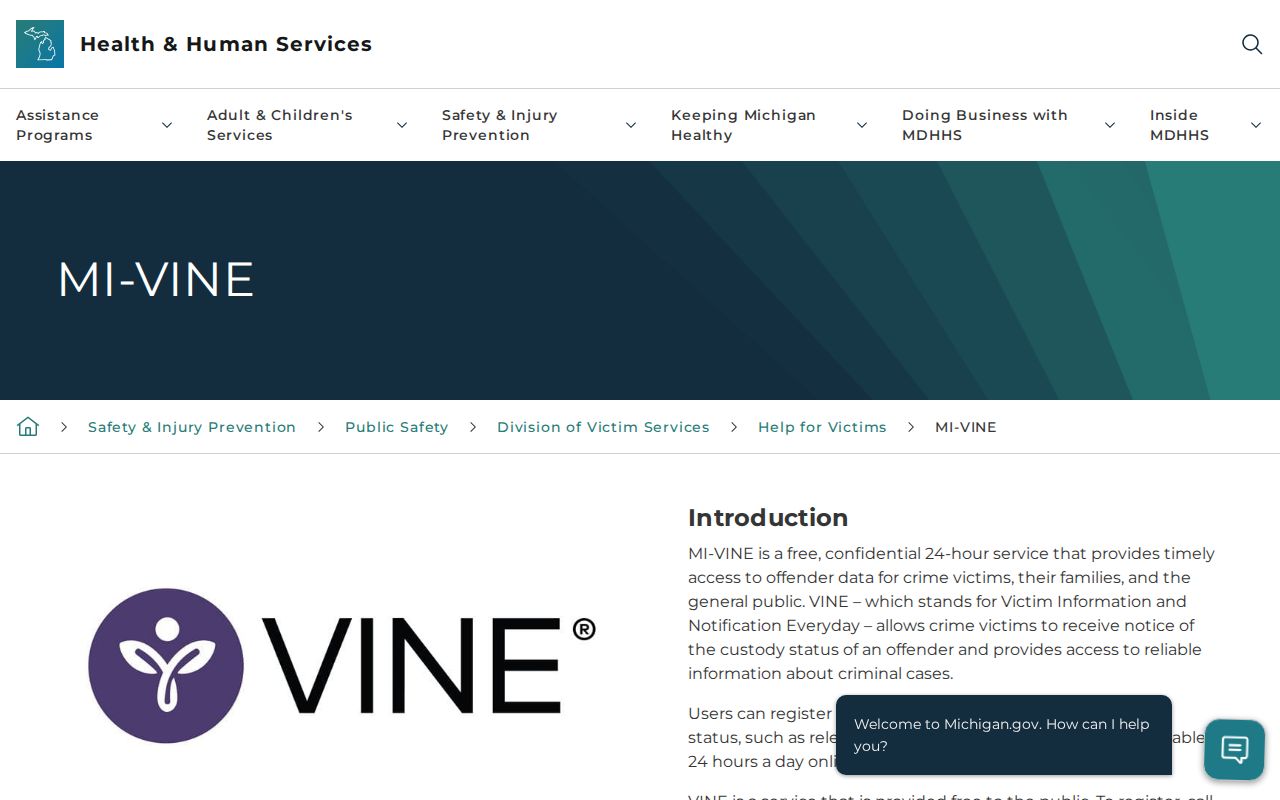
Use those state instructions when registration choices or telephone access need to be checked.
Two Michigan Notification Layers
Michigan has two notification paths that should not be merged. General VINELink can search participating custody systems and register event alerts tied to an available record. Separately, eligible direct victims can register with MDOC Crime Victim Services for fuller department notices.
The MDOC route can address parole eligibility, hearings, decisions, transfers, release, or discharge for an eligible state-prison case. A VINELink registration does not automatically enroll someone in that departmental service. Likewise, MDOC victim registration is not proof that every county jail feeds VINELink.
This two-layer setup is the central Michigan VINE quirk. The correct path depends on who holds the person and which type of notice is sought.
Michigan VINE Phone Alerts
Michigan materials provide the toll-free MI-VINE status line at 800-770-7657. Telephone access can be useful when a web session is not practical, but it follows the same core identity and coverage limits. The caller must select or identify the correct person record. A phone message reflects the event supplied to VINE, not a complete custody file.
The four-digit PIN has one focused purpose: it lets the registrant acknowledge an automated telephone notification. If a call is not acknowledged, the notification process may continue under the service’s workflow. Keep the PIN private and distinct from the person’s agency identifier. Text and email alerts do not use that telephone PIN.
Mobile and app routes can support the same search and alert functions described by Michigan. Check the official MI-VINE page for the current access choices. A changed phone number, blocked message, full mailbox, or filtered email can prevent practical receipt even when the custody record updates, so contact details should remain current.
Confirm Michigan VINELink Releases
VINELink is not a certified release log. Data may arrive after the physical event, and a result may not explain the legal reason or destination. For a county case, request the booking and release record from the sheriff. For a state-prison case, compare the notification with the MDOC offender search, where PAROLE, PROBATION, and DISCHRG have different meanings.
The OTIS landing page describes the state system’s coverage and limits.
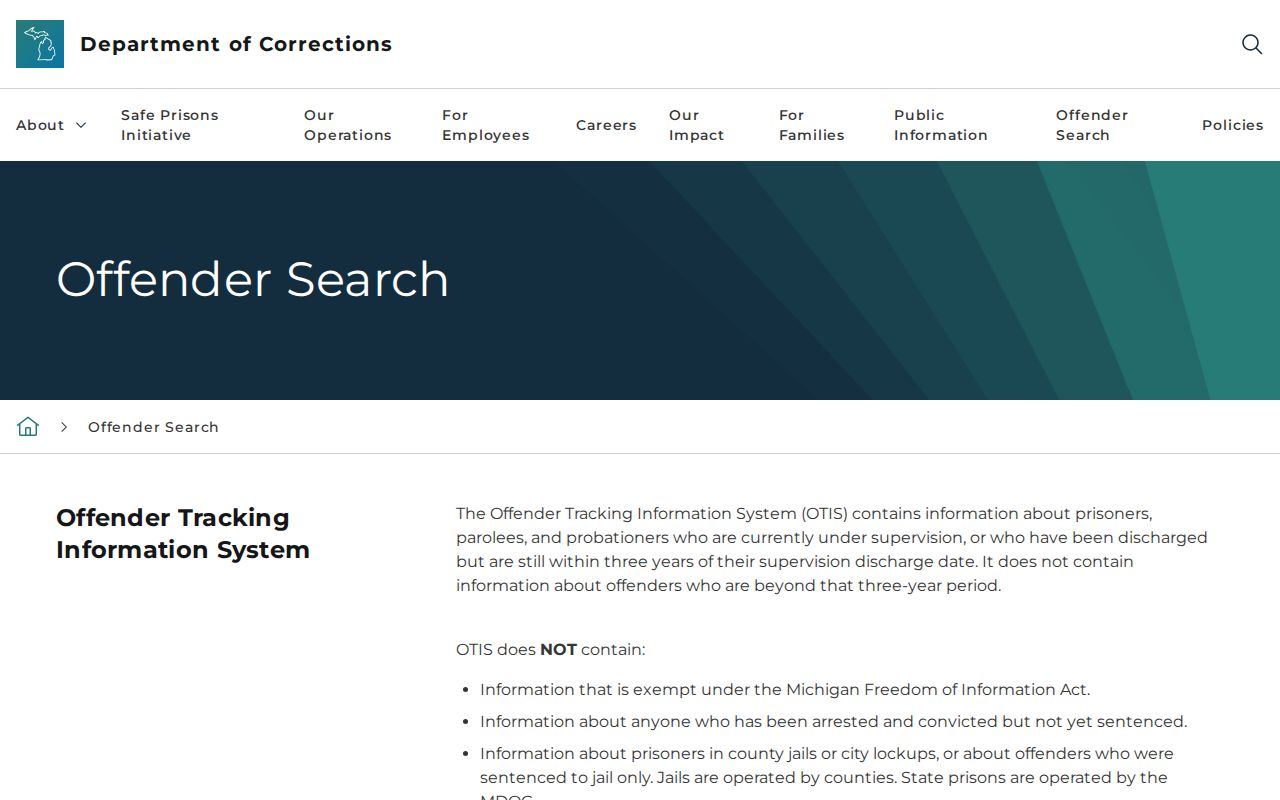
OTIS excludes jail-only cases and normally stops showing a person three years after MDOC supervision ends.
For federal imprisonment, use the Bureau of Prisons locator. It covers federal inmates released after 1982 and is updated from data extracted daily. A past release date or “Not in BOP Custody” does not rule out supervision or another agency’s hold.
The BOP Inmate Locator is the proper federal search, outside MI-VINE.
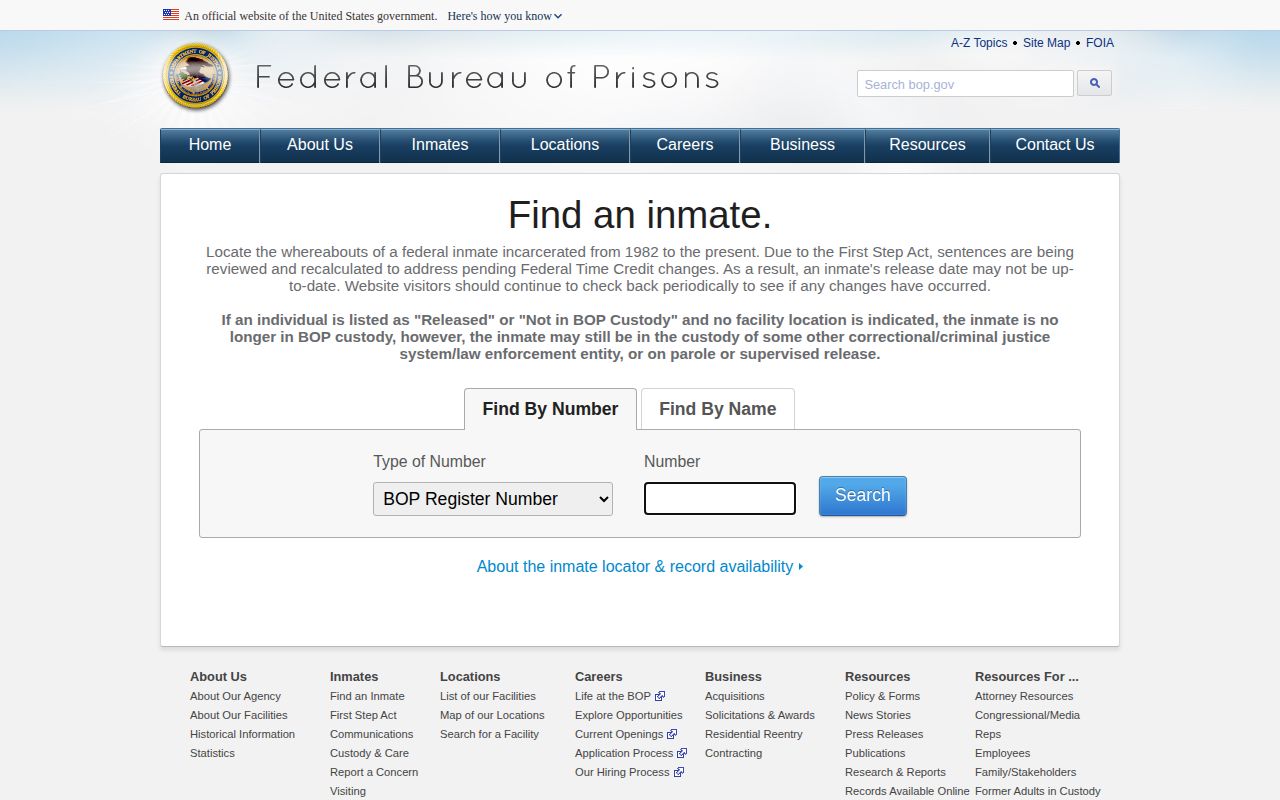
ICE has its own detainee locator, including currently detained adults and people released from ICE custody within its stated recent window. Neither BOP nor ICE status should be inferred from a Michigan VINELink result.
Resolve Michigan VINE Gaps
When the expected Michigan record does not appear, repeat the search with a full legal name, a former name, or a known identifier. Then identify the custody system from the arresting agency, sentencing court, or last confirmed facility. A county may send a person to a neighboring jail, and a state sentence may move the person into MDOC even though the county roster no longer shows them.
Contact the physical custodian next. Ask whether the person is in custody, was transferred, or had a release event posted. If the person left custody, ask for the booking and release record or the office that maintains it. For an MDOC case, use OTIS and the field office shown there. For a court order, use MiCOURT when the court participates or contact the court of record.
Do not register against a close name just to obtain alerts. A false match can create misleading release or transfer messages. Identity should be confirmed through multiple fields, and the agency should resolve a mismatch that VINELink cannot explain.
Read Michigan VINE Events
Each event answers a narrow question. A transfer alert means the person changed custody location or authority. It does not mean the person entered the community. An escape alert is also not a lawful release. A court-hearing or disposition notice concerns case activity and may occur before or after a physical custody change.
A release alert reports what the participating source sent to VINE. Confirm the time, release reason, and destination with that source. A sheriff may be able to distinguish bond release from time served, dismissal, transfer, or a detainer. OTIS may distinguish prison release to parole from the later end of supervision. Those legal differences are usually more important than the short alert label.
Notification timing can lag the physical event or arrive after an agency correction. Save the event details, then compare them with the current agency record. If the message conflicts with a live roster, call the custodian rather than choosing whichever screen appeared last.
Does a release alert end all custody? No. It ends only the custody event reported by that source. Another authority or supervision term may still apply.
Michigan Alert Versus Release Record
An alert answers whether a participating system posted a selected event. A release record can answer who released the person, when processing occurred, why custody ended, and whether the destination was the community or another authority. Those details belong to the source agency.
| Need | Best Michigan source |
|---|---|
| Timely custody-change notice | MI-VINE or the offered VINELink registration |
| County jail release details | Physical county sheriff and relevant trial court |
| State parole or discharge status | OTIS, MDOC records, and the listed field office |
| Eligible victim’s fuller MDOC notices | MDOC Crime Victim Services registration |
| Federal custody or release | BOP Inmate Locator and BOP records |
Keep the VINELink confirmation number or registration details, but use the originating office when exact proof is needed. A court order and the physical jail release event can occur at different times. The court explains the order; the custodian confirms the custody action. This final check protects against stale or incomplete event text.
Note: A release notice should be verified before making travel, court, or personal plans based on the event.