
Michigan Parole and Probation Compared
Both statuses place a person in the community, but they begin in different ways. Michigan parole is permission to leave an MDOC prison while the sentence continues. Under MCL 791.238, a parolee stays in the legal custody and control of the Michigan Department of Corrections. Probation is imposed by a court as a community sentence. A probationer may have served some jail time, but probation does not prove that a state-prison release occurred.
The distinction changes how a record should be read. A `PAROLE` status points to a person who has left a prison placement and remains supervised. A `PROBATION` status points to a community sentence administered through MDOC Field Operations for felony cases. A `DISCHRG` status means the identified MDOC term has ended. None of those labels should be inferred from a missing county-jail roster entry, since a local jail exit may also be a transfer, bond release, court writ, or move into state custody.
| Point | Parole | Probation |
|---|---|---|
| How it begins | Release from an MDOC prison under a Parole Board grant | A community sentence ordered by a Michigan court |
| State role | MDOC keeps legal custody and supervises the parole term | MDOC Field Operations supervises felony probation |
| Public status | OTIS may show `PAROLE`, a Date Paroled, and a field office | OTIS may show `PROBATION` and a supervision location |
| How it ends | Discharge from the parole term | Discharge from the probation term |
Parole also has two dates that should not be collapsed. The Board’s grant is its approval, while the Date Paroled marks the later event when MDOC says the person left prison or another secure placement on parole status. Release planning can include placement review, special conditions, and coordination by the Parole Release Unit. Probation begins from the court’s judgment instead. A MiCOURT docket may help confirm that judgment, but the docket is not a physical prison-release log and should be paired with OTIS when MDOC supervision is at issue.
The MDOC home page shown in this official capture identifies the agency responsible for Michigan prison releases and felony community supervision.
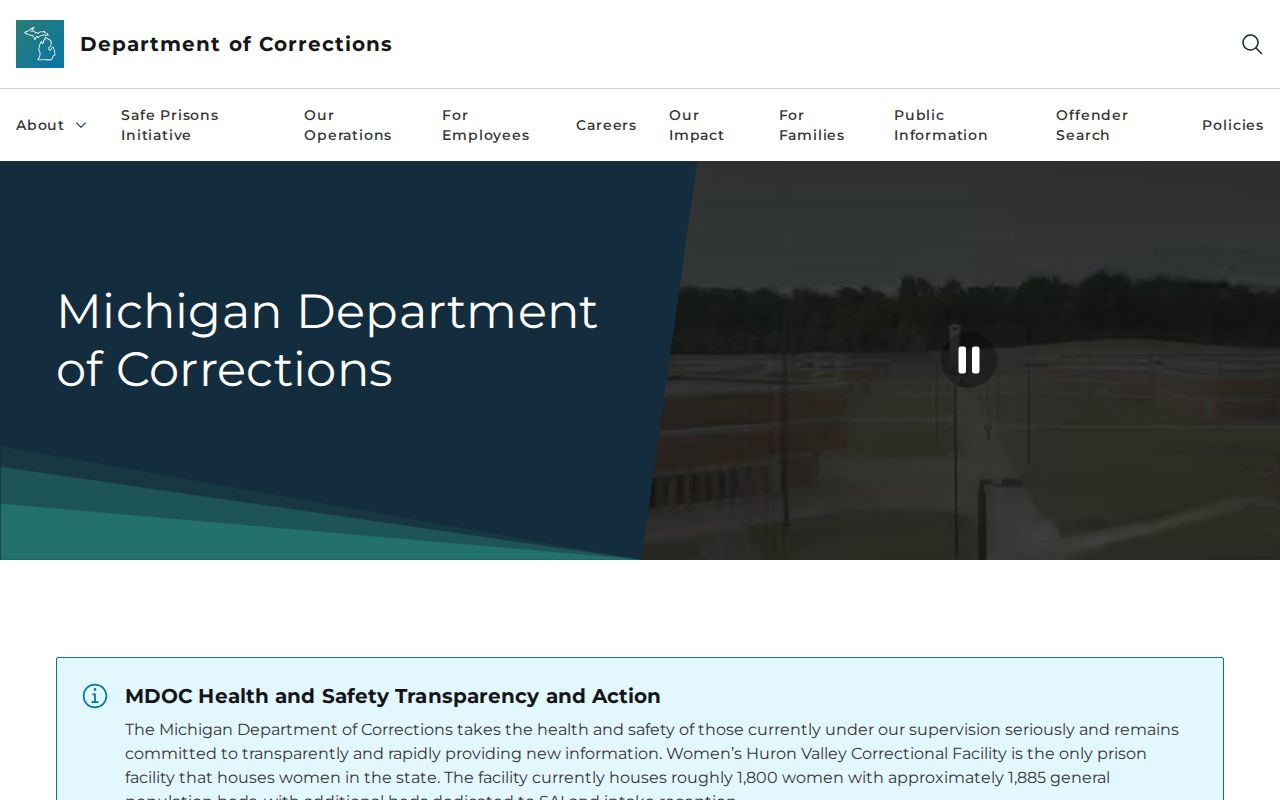
That statewide role is distinct from the sentencing court, a county sheriff, and the Michigan Parole Board’s release decision function.
Verify Michigan Post-Release Supervision
The strongest public starting point is the Offender Tracking Information System, or OTIS. Its public scope includes current prisoners, parolees, and probationers under MDOC supervision, plus people discharged within three years of the supervision discharge date. It excludes jail-only cases and people who have been off MDOC supervision longer than that public window. A no-result is thus not proof that supervision never existed.
Identity needs more than a name or photograph. OTIS can provide an MDOC number, aliases, physical details, sentencing county, court file number, offense, status, event dates, and a supervision location. The six-digit MDOC number is the best search key when known. With a common name, compare several fields before treating a record as a match.
- Open OTIS and search the six-digit MDOC number, or use the person’s last and first names.
- Refine a broad result with age, sex, race, status, identifying marks, or location only when those facts are known.
- Open the likely record and compare the MDOC number, aliases, sentencing county, case number, and offense.
- Read `PAROLE`, `PROBATION`, or `DISCHRG` with the Date Paroled or Date Discharged instead of relying on the location alone.
- Use the displayed supervision location and MDOC office directory to identify the field office for a current case.
The live OTIS search form pictured here supports identity fields and a status filter for a focused Michigan supervision lookup.
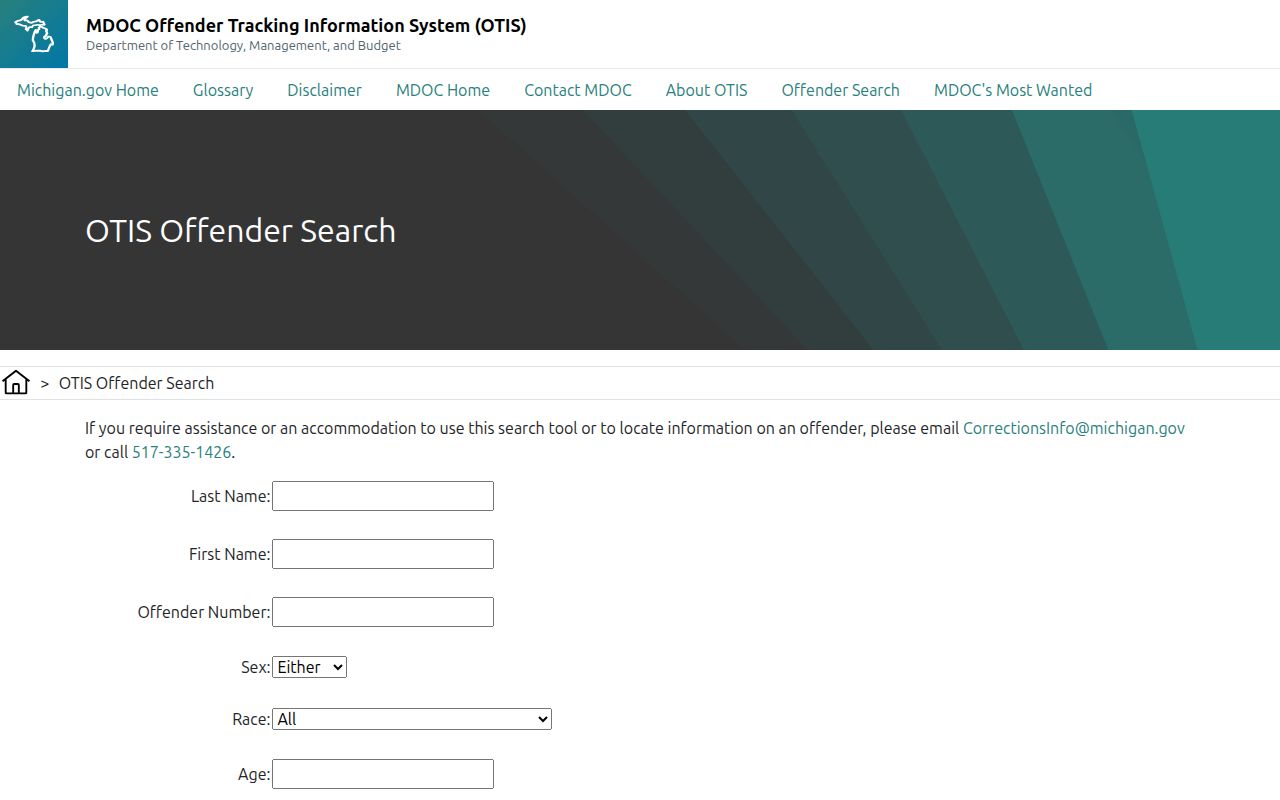
The status filter helps separate active prison records from parole, probation, and discharged results, but the opened detail still must be checked.
When OTIS returns nothing, choose the fallback based on jurisdiction. A jail-only sentence, bond release, or dismissal belongs with the county sheriff and court because OTIS expressly excludes county-jail-only cases. An older state supervision record may have passed the public three-year discharge window. For that case, MDOC records and the sentencing court are more useful than repeating a live search. A current parolee or felony probationer should ordinarily remain within OTIS scope, subject to legal exclusions and data limits.
Note: A supervision location change can reflect reassignment between offices and does not, by itself, mark a new release or discharge.
Michigan Supervision Offices and Board
MDOC Field Operations Administration runs state parole and felony-probation supervision. Its office directory organizes local coverage through ten regions and through Outstate and Metropolitan operational areas. The useful route is person first, office second: find the current OTIS record, note the supervision location, then use the directory to locate the proper office. A court-derived sentencing error belongs with the sentencing court, while an error in supervision data should be raised with the field office.
The Michigan Parole Board serves a different function. It is the sole paroling authority for felony offenders committed to MDOC and decides whether an eligible prisoner receives parole. The Parole Release Unit then documents an approved parole date, term, special conditions, and placement. Once release occurs, the assigned agent and field office handle the community supervision term.
Michigan organizes field offices statewide rather than through one central office that manages every local detail. This makes the location field operationally useful. It points toward the office that can address a supervision notation or current reporting question. It does not authorize release and is not a substitute for a Board decision. Board staff handle parole-decision matters, field staff handle supervision, and the sentencing court remains the source for errors rooted in its judgment.
Michigan supervision contacts
Field office routing: MDOC Parole and Probation Office Directory
Michigan Parole Board: 517-373-0270, Parole-Board-Staff@michigan.gov, weekdays from 8 a.m. to 5 p.m.
The official Michigan Parole Board information captured here explains the Board’s role in parole and clemency matters.
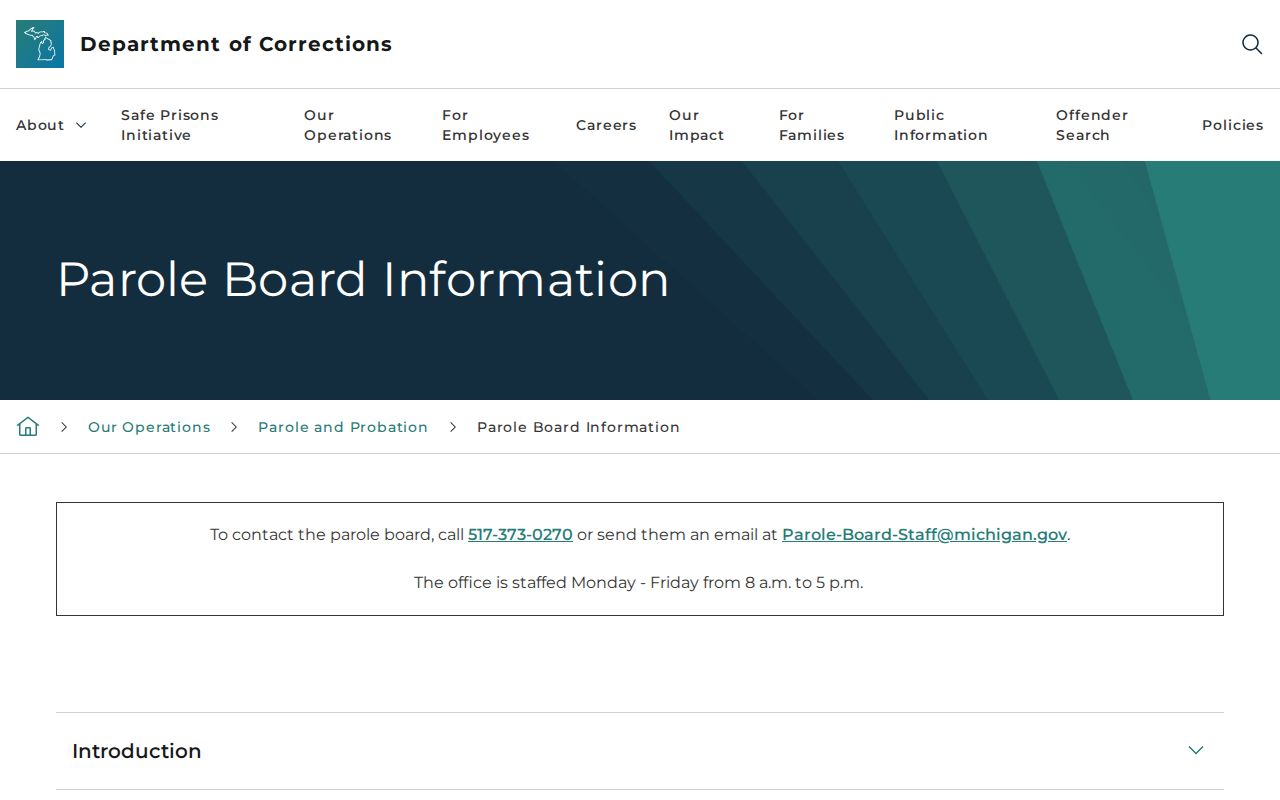
A Board grant is a decision milestone. The Date Paroled in OTIS is the better public marker of the later physical prison release event.
Michigan Supervision Record Terms
Corrections terms can sound alike while marking different legal events. Read them in sequence: sentence, possible prison term, parole or probation, then discharge. A detainer or violation may interrupt that path. The labels below keep a status check tied to the event MDOC actually records.
- Parole
- Conditional community placement after prison while MDOC legal custody and the sentence continue.
- Probation
- A court-ordered community sentence that does not itself establish a prior state-prison release.
- Discharge
- The end of the identified sentence or supervision term and of MDOC jurisdiction for that term.
- Absconder
- A supervision status indicating the person is alleged to have stopped reporting or otherwise left supervision without authority.
- Detainer
- A request or hold from another authority that can keep custody in place after one agency’s release event.
“Released” needs the same care. A parolee has been released from the prison placement, yet remains in state legal custody. A discharged person has reached the end of the identified MDOC term. Someone missing from a county jail roster may have entered MDOC custody instead of reaching the community. Checking the agency, status, and date together prevents those very different events from being described as one broad release.
The official OTIS scope page in this image states who appears and explains the three-year post-discharge boundary.
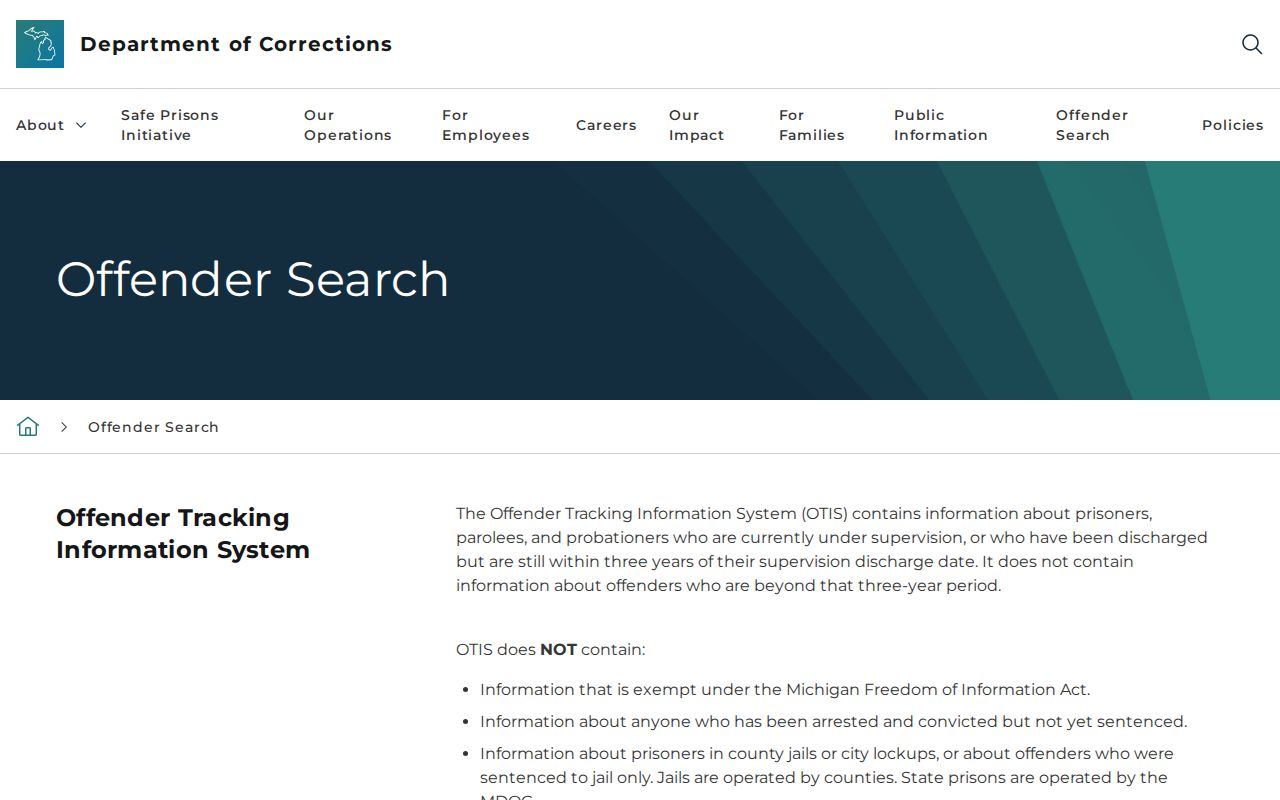
Those limits explain why an older discharged record may vanish even though the underlying court and departmental records still exist.
Michigan Parole Violations and Absconders
Parole and probation can carry case-specific conditions. The public record does not support guessing what applies to a person. A violation allegation may lead to investigation, an MDOC warrant, detention, and a parole revocation process. It may also change the office or location shown in OTIS. None of those entries should be described as a new conviction unless a court record establishes one.
OTIS may show an absconder status, but MDOC does not present OTIS as a full statewide warrant database. A person with reliable information about an absconder’s location should contact law enforcement. Officers can verify authority, make an arrest when proper, and notify the supervising office. MDOC also lists its Absconder/Escapee Tip Line at 517-755-0855. The Absconder Recovery Unit investigates escapees, parole violators, and qualifying probationers.
Important: Do not approach a person based on an online status. Give current location information to law enforcement or MDOC.
MI-VINE may send custody event alerts for a participating system, but an alert does not certify parole, probation, or warrant status. The statewide VINELink inmate check has the distinct notification steps and coverage limits.
How Michigan Supervision Ends
Supervision ends through discharge, not merely because a person has left prison or changed offices. MDOC policy calls for a discharge certificate and a departmental database closeout when a sentence terminates. The policy also provides an early-parole-discharge review path for specified cases after required portions of supervision and any statutory minimum term. Review does not guarantee approval. A request and final Board action are still required.
OTIS gives a time-limited public view of that result. A detail may show `DISCHRG`, Date Discharged, and a discharge reason. MDOC keeps discharged people searchable for three years from their supervision discharge date. After the window closes, use the sentencing court or the appropriate MDOC records channel instead of reading absence as proof of a different event.
Michigan also distinguishes public data from certified correctional files. MDOC says a PENPACK for a paroled or discharged person, which can include certified correctional documents, is restricted to recognized criminal-justice authorities on official business. A member of the public should use the ordinary MDOC records or FOIA process for a properly described record, subject to fees, redactions, and exemptions.
Michigan FOIA generally gives a public body five business days after legal receipt to grant, deny, partially grant, or invoke one extension of up to ten business days. The request must describe the record well enough to find it. Naming the supervision type, approximate dates, sentencing county, and requested discharge certificate is more precise than asking for every file about a person. MDOC can still apply lawful fees, exemptions, and redactions.
The MDOC records-request channel shown here is the public route for requesting an identified supervision or discharge record.
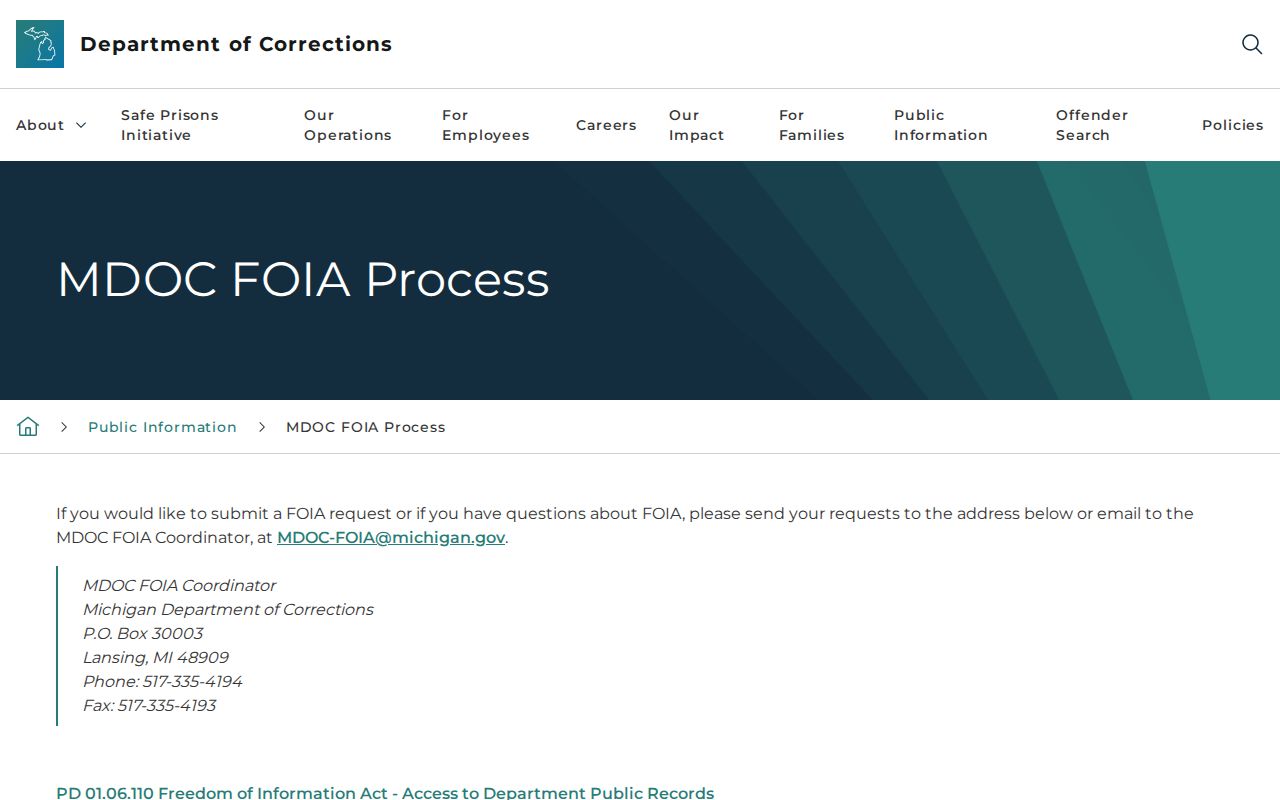
A clear request should give the person’s name, aliases, MDOC number if known, approximate dates, and the exact discharge or supervision document sought.
Michigan Discharge Certificates and OTIS
A public status screen and durable discharge paperwork serve different needs. OTIS is fast and useful for a current point-in-time check. It can show the termination date and reason while the record remains within its publication window. The discharge certificate or order is the departmental record created through MDOC’s sentence-termination process. It is more durable than a screenshot and should be requested from the proper custodian when the exact document matters.
This Michigan distinction prevents two common errors. First, `PAROLE` means release from prison to continued state control, not the end of the sentence. Second, an OTIS no-result after the three-year boundary does not erase a valid past discharge. The certificate process, MDOC records, and sentencing-court material may still document what occurred. The full statewide search and county-jail release routes are set out on the Michigan released inmates home page.
Note: Request the named discharge document itself when a dated OTIS screen does not meet the need for lasting proof.