
Michigan Parole Board Decisions
The Michigan Parole Board is the sole paroling authority for felony offenders committed to MDOC. It also advises the Governor on executive clemency. The Board has ten members under Executive Order 2011-3. MDOC says a three-member panel decides most parole cases by majority vote, while a life-sentence case requires a majority of the full Board.
Time served is only one part of the review. The Board may consider the current offense, criminal history, conduct in prison, program performance, age, parole-guidelines score, validated risk assessments, a prisoner interview when one occurs, and relevant victim or other input. Under MCL 791.233, parole requires reasonable assurance that release will not make the person a menace to society or a risk to public safety. Reaching eligibility gives the Board jurisdiction. It does not compel release.
The Board’s task also differs from sentence calculation. A court imposes the term, MDOC computes the governing dates, and the Board acts within the legal eligibility rules. For an ordinary case, the Earliest Release Date may mark when the Board first gains jurisdiction. The Board then evaluates the record and may grant, deny, or defer. A person can therefore be eligible without having a public hearing date, a favorable decision, or a fixed date to leave prison.
The official Michigan Parole Board page shown here describes its authority, decision process, and clemency role.
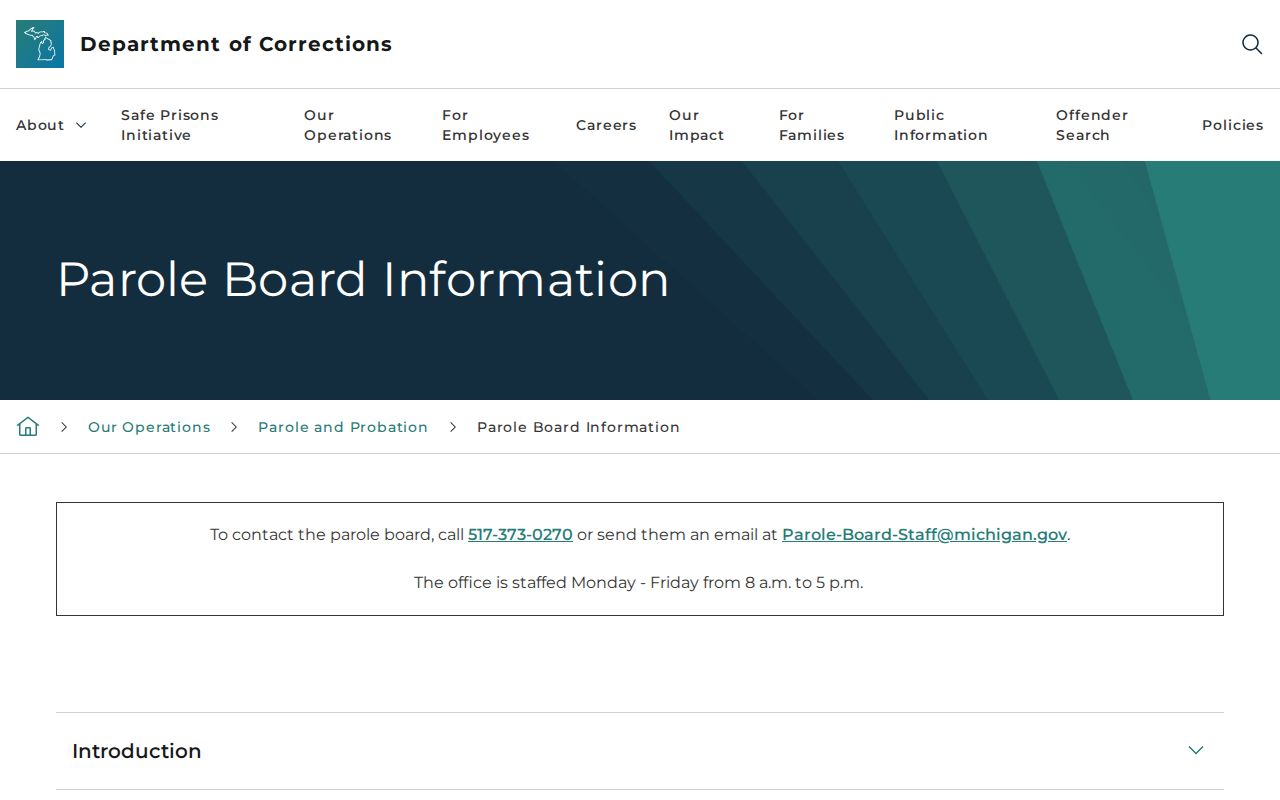
The Board can be reached at 517-373-0270 or Parole-Board-Staff@michigan.gov on weekdays from 8 a.m. to 5 p.m.
Locate a Michigan Parole Hearing
Michigan does not post a broad public calendar of every routine parole interview. The official Public Hearing Registration page lists hearings under the Lifer Law and for proposed pardons or commutations. It expressly excludes routine parole consideration and proceedings for people returned as parole violators. Treating that page as an all-prisoner schedule would miss most ordinary reviews.
For hearings that do appear, an entry can identify the person, MDOC number when applicable, hearing date and time, and an online access link. MDOC says related press releases generally appear about two weeks to 30 days before the scheduled public hearing. Registration closes two business days before the event. The schedule is rolling, so an older event may be better found through MDOC press releases or Board contact.
- Decide whether the matter is a Lifer Law, pardon, or commutation public hearing, rather than a routine parole review.
- Open Public Hearing Registration and match the name and MDOC number, when listed.
- Read the date, time, online-access details, and registration deadline in the notice.
- Check MDOC press releases for the related hearing notice and any later update.
- Contact Board staff when the hearing type or current listing remains unclear.
The captured Michigan public hearing calendar shows the dated clemency and Lifer Law stream available to the public.
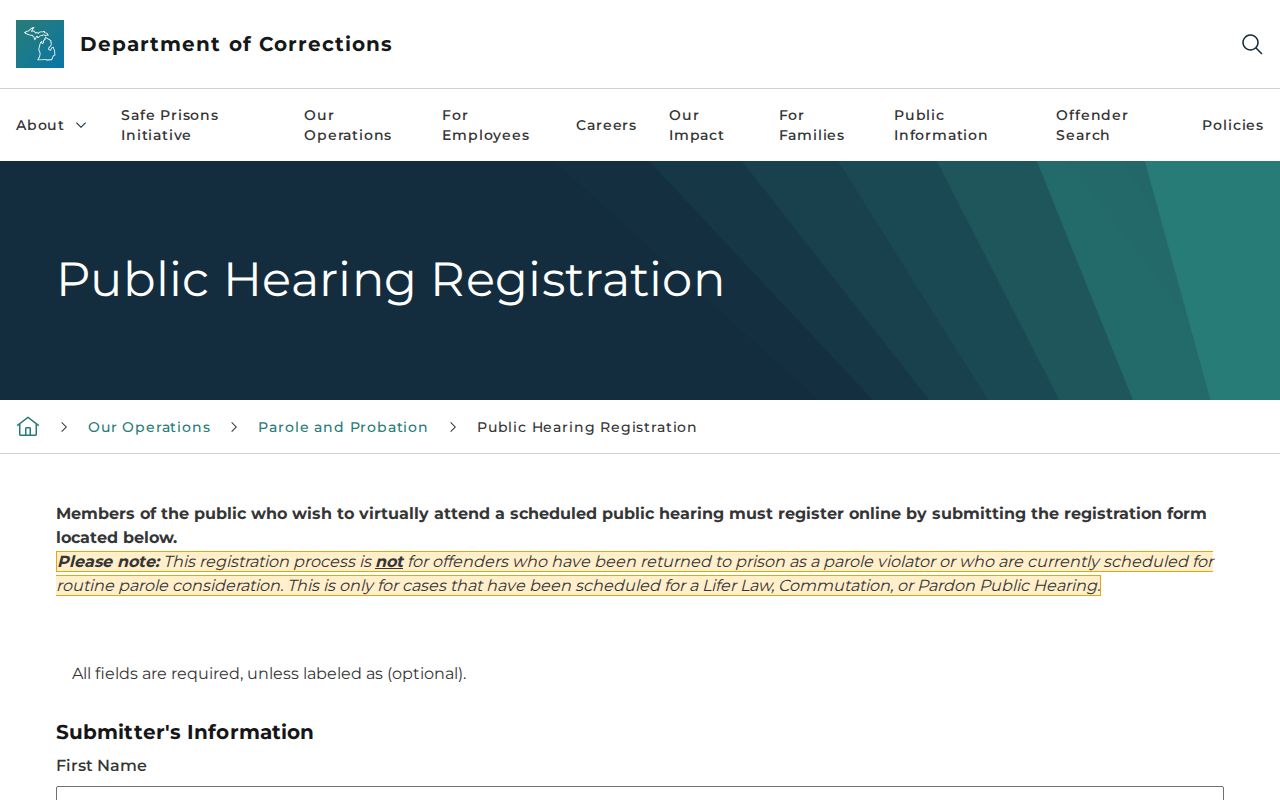
Its limited scope is as important as the dates it lists. An absent name does not show that no routine parole review is underway.
Note: Public hearing attendees must register by the stated deadline; a listing alone does not reserve access to the online proceeding.
Michigan Public Hearing Attendance Rules
Registration is required no later than two business days before a listed public hearing. MDOC directs participants to keep cameras and audio off unless they are called to testify. Recording, photography, and screenshots of the proceeding are prohibited. Those event rules apply to the public Lifer Law and clemency hearing stream. They do not turn a private routine parole interview into a public event.
A hearing notice should be read as an event record, not a custody result. It establishes that a specified public proceeding is scheduled. It does not establish a grant, a release plan, or a Date Paroled. After the event, the relevant trail may include Board correspondence, a later public notice, OTIS status, or an aggregate quarterly report, depending on the type of matter.
People who plan to speak should follow the instructions in the specific notice because the public page controls registration for that event. A routine parole matter takes a different route. MDOC’s parole consideration process includes the file review, interview when conducted, panel action, notice, any authorized appeal, and referral for release work after a grant. The absence of public access to the interview does not mean that no Board review took place.
Hearing distinction: Public registration covers the proceedings MDOC lists. Routine parole interviews do not appear on a comprehensive public calendar.
Find Michigan Parole Hearing Results
No official name-searchable database of every individual Michigan parole decision was located in the statewide research. MDOC instead publishes quarterly Parole Board Decisions Reports in its Legislative Reports Archive. The reports count grants, denials, and deferrals, divide results by interview number and parole-guidelines score, and summarize reasons for denial or deferral. They are valuable for Board trends, but they are not individual case files.
The reporting cadence can be easy to misread. January covers September through November, April covers December through February, July covers March through May, and October covers June through August. MDOC uses this delay so the figures can settle. A report label and a decision date therefore need to be read together before comparing periods.
Decision reports answer statewide questions, such as how many outcomes fell into each category and why panels denied or deferred cases. They cannot confirm the notice issued in one person’s case. Board correspondence is the direct decision record, while OTIS supplies a public status check. If the person remains listed as a prisoner after a grant, that can reflect placement work or another step still pending. It should not be rewritten as a contradiction without confirmation from MDOC.
- Open the MDOC Legislative Reports Archive and select the Parole Board Decisions Report for the needed reporting period.
- Use the tables for aggregate grant, denial, and deferral totals, not as a search for one named person.
- For an individual, search OTIS by MDOC number or verified identity and read the current status and event dates.
- Contact the Board or the field office displayed in OTIS when the actual notice or underlying decision is required.
- Confirm physical release through Date Paroled rather than assuming the Board’s positive action caused same-day departure.
The legislative reports archive pictured here is the official source for quarterly Michigan Parole Board decision reports.
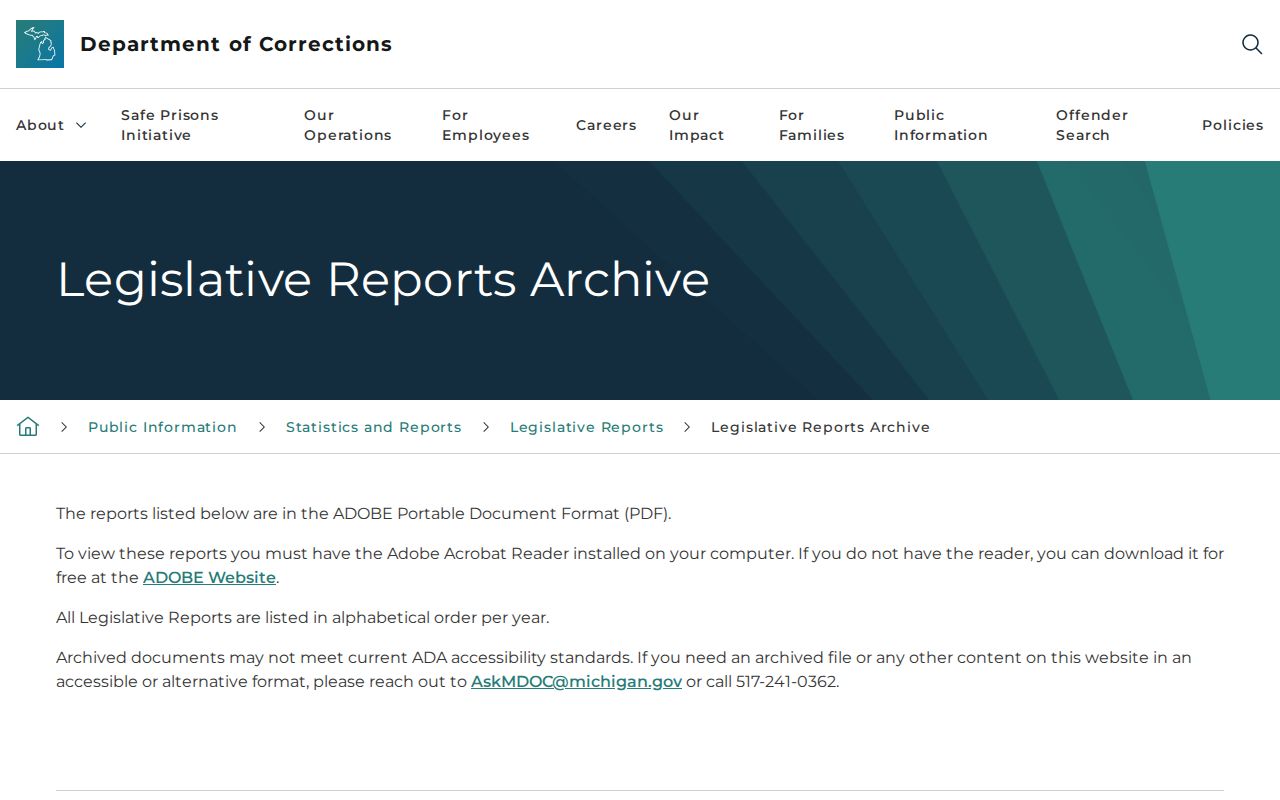
For one person, the report supplies context only. OTIS and Board correspondence provide the more direct record trail.
Michigan Parole Hearing Outcomes
A Board result and a prison release are separate milestones. A positive decision goes to the Parole Release Unit, which handles placement and documents the parole date, term, and special conditions. MDOC also notes that a prosecutor from the committing county or the crime victim may appeal a grant through the governing process. The physical departure is best checked later through the OTIS Date Paroled field.
| Outcome | What it shows | What follows |
|---|---|---|
| Granted | The Board approved parole under the case’s governing process | Release-plan, placement, appeal, and administrative steps remain before physical release |
| Denied | The Board did not approve parole at that review | MDOC says the Board sets a future review date |
| Deferred | The Board did not issue a final grant or denial in the reported decision category | The matter remains for later Board action or review |
| Grant under appeal | A positive decision is being challenged through the authorized process | Do not treat the grant alone as proof that release occurred |
The 2026 first-quarter report covers four settled windows from December 2024 through November 2025. Across them it reports 14,843 hearings, with 6,789 grants, 3,700 denials, and 4,354 deferrals. These are hearing decisions, not unique people released and not proof that every grant led to departure within the same period.
Those totals also use a different denominator from other MDOC measures. A hearing count is not the prison population, the number of moves to parole, or the number of people who ended supervision. Some report tables further separate cases by guideline score or interview number. Preserve each label and reporting window when describing a trend. Combining them into a single “release rate” would state more than the report supports.
The OTIS search interface shown here is the next public check for a named person’s current Michigan corrections status.
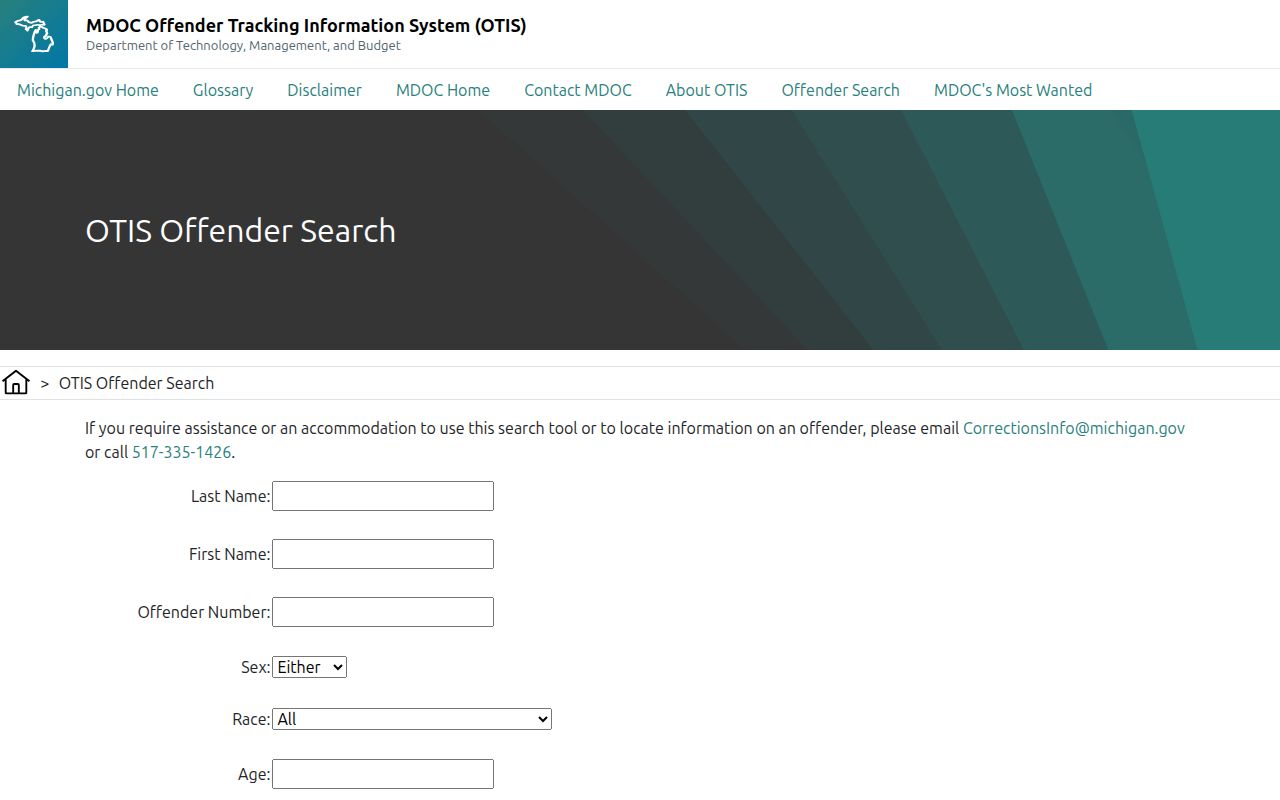
A `PAROLE` status and Date Paroled support a completed prison-release event, while a future eligibility date or Board grant alone does not.
Michigan Parole Hearing Eligibility
MCL 791.234 is the main Michigan parole-eligibility statute. In an ordinary indeterminate sentence, the court sets a minimum and maximum term. The Board gains jurisdiction after the minimum has been served, less good-time or disciplinary credits if an older sentence qualifies for them. The same statute contains special life-sentence rules, exceptions, and groups that are not eligible for parole.
Modern truth-in-sentencing cases work differently. MDOC says covered assaultive crimes committed on or after December 15, 1998, and all other covered crimes committed on or after December 15, 2000, must serve the full minimum before parole consideration. Credits do not reduce that minimum. Older cases can still depend on the offense date and the legacy credit provisions in MCL 800.33.
The Earliest Release Date in OTIS usually marks the first point of Board jurisdiction for an ordinary case. It is not a hearing appointment and does not promise release. The Maximum Discharge Date marks the outer sentence endpoint under the controlling calculation. Between those dates, Board action, legal limits, placement work, an appeal, a detainer, and administrative processing can affect what happens.
Life sentences demand added care because Michigan law separates parolable and nonparolable categories and sets specialized procedures. The public Lifer Law hearing stream should not be applied to every person serving a long minimum term. Nor should the lack of a listing be read as proof that a sentence is nonparolable. The judgment, offense date, statute, and MDOC record must be read together for the individual case.
The MDOC Truth in Sentencing page captured here explains why eligibility rules differ by offense date.
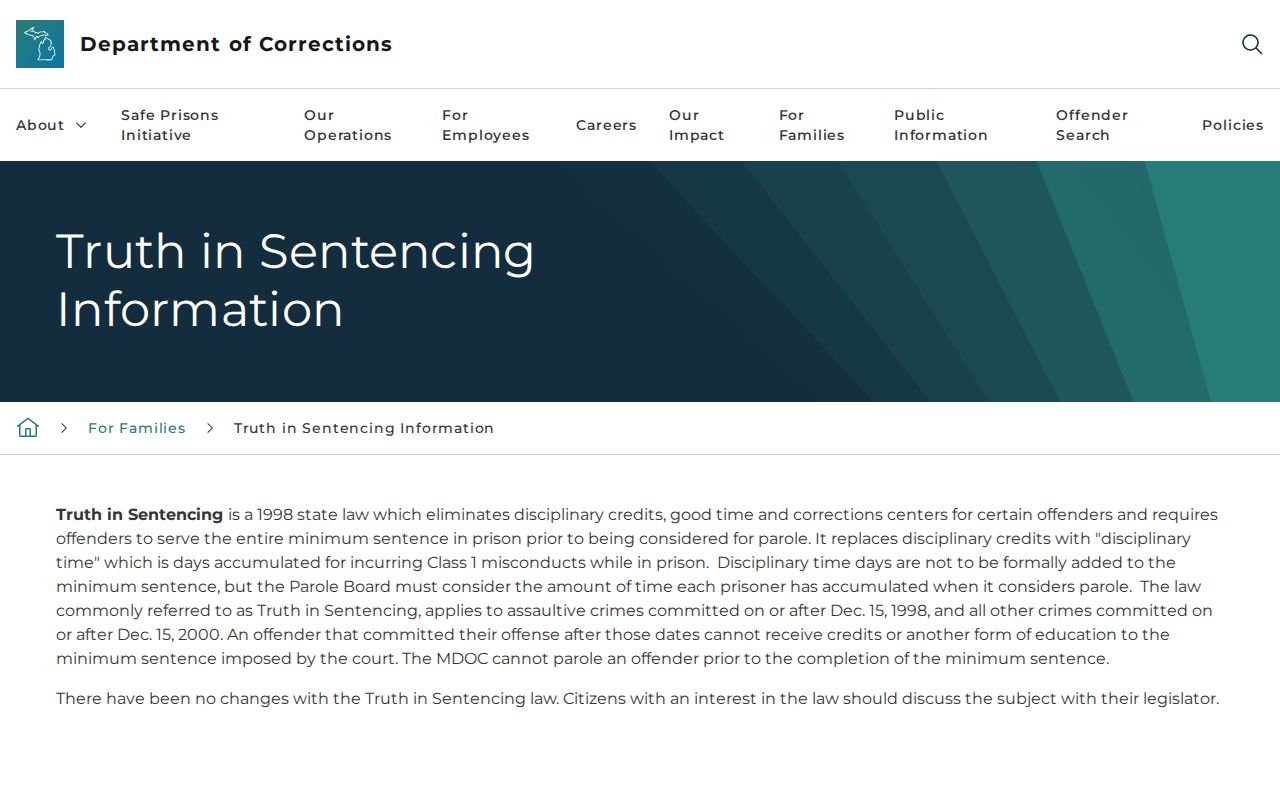
The sentence dates guide when review may start. They cannot predict what the Board will decide or when physical release will occur.
Note: Eligibility means the Board may act under the law; it does not create a scheduled hearing or guaranteed release date.
Michigan Clemency and Pardon Hearings
Michigan’s visible public-hearing stream is chiefly a Lifer Law and clemency stream. That is the key statewide distinction. The Board advises the Governor on executive clemency, including commutations and pardons. A commutation can alter a sentence. A pardon addresses the conviction through executive clemency. Neither should be confused with a routine parole grant, which releases an eligible prisoner to continued MDOC custody and supervision.
Michigan also provides a pardon application path after probation, parole, or discharge. This makes the public registration page relevant beyond current prison reviews, but still not a complete parole calendar. For a listed pardon or commutation hearing, use the name, MDOC number when supplied, event date, press notice, and registration link as the record set. For routine parole review, use the Board process, OTIS, and direct Board correspondence instead.
A clemency hearing entry proves that the listed public proceeding was set. It does not prove that relief was granted. A later pardon, commutation, parole decision, and physical release each require their own confirming record. If parole does lead to release, the terms of community supervision are explained on the Michigan parole and probation page.