
Understanding Michigan Released Inmates
“Released” describes a custody event, not one uniform legal result. A county sheriff may release a person on bond, after a dismissal, for time served, at the end of a jail term, or into another agency’s custody. The Michigan Department of Corrections may release a sentenced prisoner to parole or close its jurisdiction through discharge. Federal and immigration systems keep their own records. A transfer, writ, hospital move, escape, or detainer can also end one facility entry without placing the person in the community.
The first sound question is who held the person. Live county rosters tend to describe who remains in a local jail. Once someone leaves, the sheriff’s booking and release record becomes more useful. MDOC’s Offender Tracking Information System, known as OTIS, covers state prisoners and current parolees or probationers, plus people within its limited post-discharge window. A court docket can explain the legal order. None of those sources alone proves what every other agency did.
The official MDOC home page shows the agency that runs Michigan prisons and state supervision.
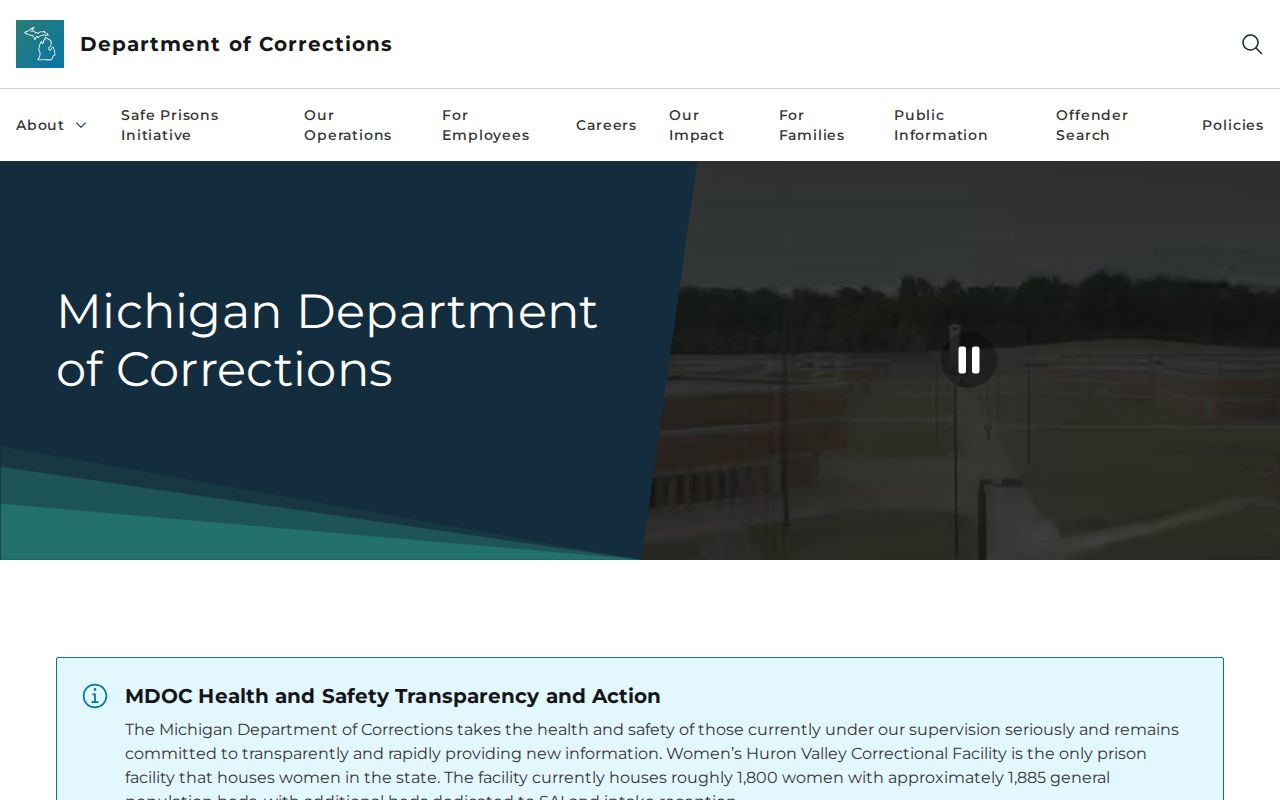
That agency boundary matters because MDOC does not operate county jails.
Michigan Release Paths Compared
Michigan uses different terms for different exits. Parole permits a person to leave prison while remaining in MDOC legal custody. Probation is a court-ordered community sentence and may follow no prison stay at all. Discharge ends the identified sentence or supervision. A county transfer to MDOC, the U.S. Marshals Service, or ICE is continued custody, even when the person disappears from a sheriff’s public roster.
| Event | What it means | Best record after the event |
|---|---|---|
| Bond or court release | Local jail custody ends under a court-authorized condition or order | County booking and release record plus the court docket |
| Time served or jail term completed | The local custodial term has ended | County sheriff release record |
| Transfer | One facility releases custody to another agency | Both agencies’ movement or intake records |
| Parole | Physical prison release with MDOC supervision continuing | OTIS Date Paroled and current supervision status |
| MDOC discharge | The sentence or supervision under MDOC has ended | OTIS Date Discharged, then MDOC records |
| Federal or ICE release | The named federal custodian no longer holds the person | BOP or ICE locator and agency records |
Important: A name dropping off a roster does not distinguish community release from transfer, a hold, or another custody event.
Michigan Release Record Fields
A useful release record identifies both the person and the event. At the county layer, fields vary because each sheriff manages its own jail system. Common useful items include a booking number, admission and release timestamps, release reason, releasing facility, and destination or receiving agency when that field is maintained and public. The court file number connects a jail event to the order that authorized it.
OTIS uses a different field set. It can show the six-digit MDOC number, names and aliases, age or birth data, physical identifiers, offense, sentencing county, court file number, minimum and maximum terms, location or field office, status, Date Paroled, Date Discharged, and discharge reason. Earliest Release Date and Maximum Discharge Date are sentence markers, not proof that a release already happened. Not every record contains every field.
| Field | What it shows |
|---|---|
| Booking or MDOC number | The agency identifier used to separate people with similar names |
| Release timestamp | When a county records the exit from its jail |
| Release reason or type | Bond, court order, sentence completion, transfer, parole, discharge, or another coded event |
| Date Paroled | When MDOC says prison or camp placement ended through parole status |
| Date Discharged | When the identified MDOC sentence or supervision ended |
| Facility or office | The custodial site or supervision location tied to the record |
| Court file and county | The case source used to cross-check identity and legal action |
MDOC’s OTIS information page explains its exclusions and three-year post-discharge display boundary.
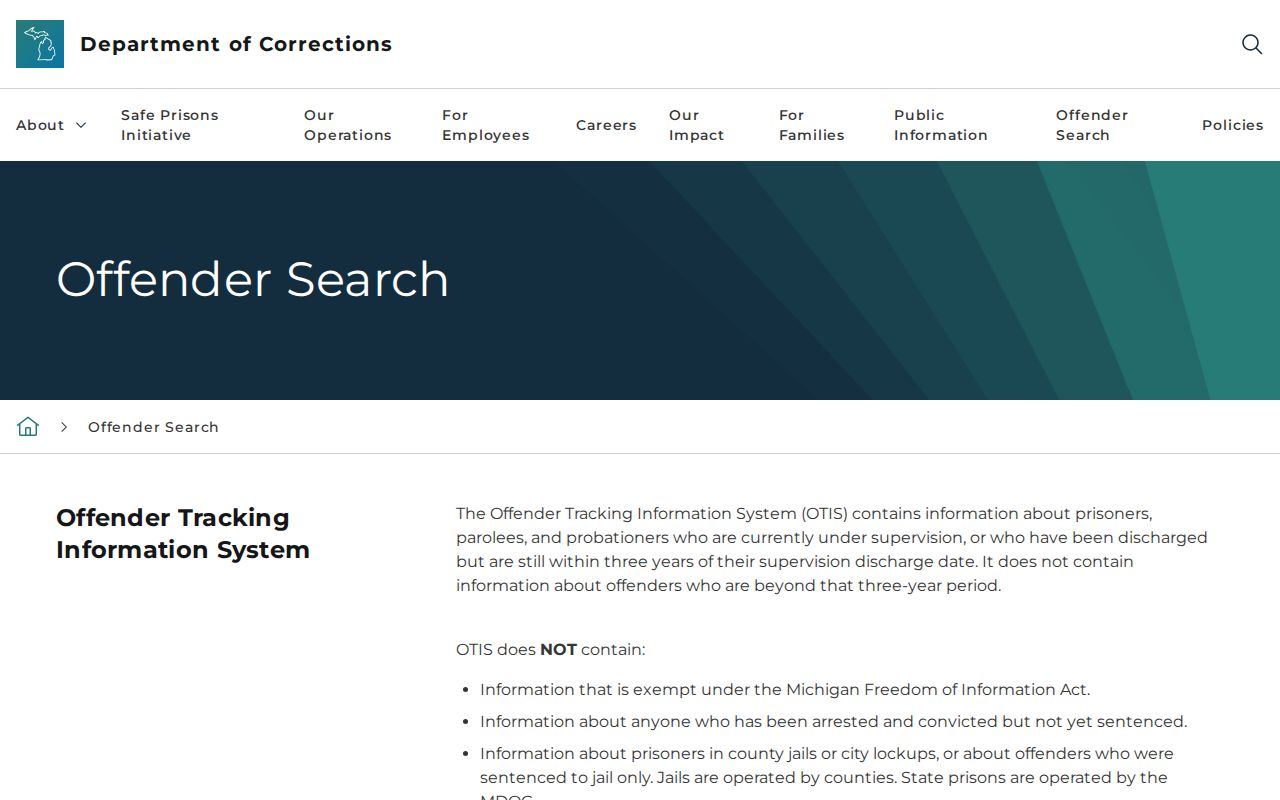
The public search is a bounded view, not the full correctional file.
Note: A photo can help narrow a match, but identifiers, aliases, court files, and offense details provide firmer identity checks.
Request Michigan Release Records
The record must be requested from its custodian. The physical county sheriff holds local jail booking and release material. MDOC holds prison, parole, probation, and discharge records. Court records follow court-access rules because Michigan FOIA excludes the judiciary from its public-body definition when clerks act in that role. A clear request names the person, aliases, known identifier, approximate date range, facility, and the exact items sought.
- Identify whether the event involved a county jail, MDOC, a federal prison, or immigration custody.
- For a local jail event, use the Michigan County Directory to reach the sheriff that held the person.
- Ask for specific records, such as admission and release times, release reason, destination, or receiving agency.
- For an MDOC event, send a written FOIA request to MDOC-FOIA@michigan.gov or the FOIA Coordinator at P.O. Box 30003, Lansing, MI 48909.
- Keep the response, fee notice, partial denial, or exemption explanation with the request.
Michigan FOIA generally gives a public body five business days after legal receipt to grant, deny, partly grant, or invoke one extension of up to ten business days. Fees and exemptions may apply, so no statewide flat price can be promised. MDOC separately routes current-prisoner records and past-prisoner records up to six years after release. That records route does not expand OTIS’s shorter public display period.
The MDOC FOIA process provides the official email, mailing, phone, fax, policy, and payment channels.
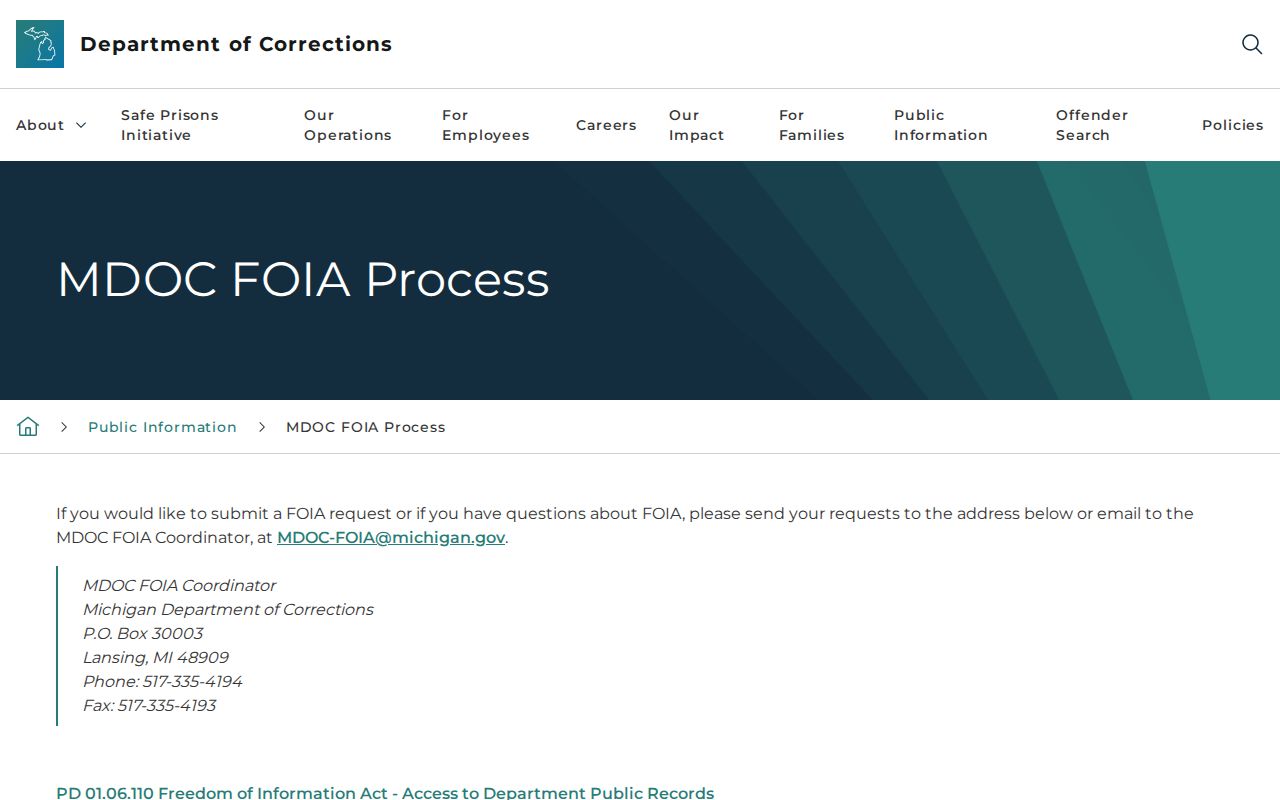
A public requester should use this ordinary records path, not the restricted PENPACK process reserved for recognized criminal-justice authorities.
Michigan Release Records Law
Michigan’s Freedom of Information Act, 1976 PA 442 and MCL 15.231 through 15.246, governs written requests to executive and local public bodies. It does not make every detail public. Medical, security, victim, juvenile, sealed, and other exempt material may be withheld or redacted. Court dockets and clerk copies use judicial access procedures rather than the same FOIA route.
MDOC says OTIS information is removed when a conviction is set aside or expunged by the sentencing court or by operation of law. Otherwise, its legislatively required publication ordinarily lasts three years after supervision discharge. A missing older record may therefore reflect the time limit, not proof that no MDOC case existed. Suspected court or sentence errors belong with the sentencing court. Supervision errors should be raised with the listed field office.
- Parole
- Permission to leave prison while remaining under MDOC custody and supervision.
- Probation
- A court-ordered community sentence that does not by itself prove a prison release.
- Discharge
- The end of the identified sentence or supervision under MDOC jurisdiction.
- Detainer
- A request or legal basis for another authority to take or keep custody.
- Expungement or set-aside
- A legal action that can remove a conviction from the ordinary public OTIS view.
Michigan Mugshots After Release
Michigan law does not create one statewide gallery for booking photos after release. A county sheriff may hold a booking image as part of its agency record, while an MDOC photograph may appear in OTIS when the person falls within that system's scope. Availability still turns on the record custodian, a valid request, and any exemption, sealing order, set-aside, or expungement that applies. The statewide legal review found no current Michigan Compiled Laws provision aimed just at commercial mugshot publication or a fee charged to remove an image. That bounded result should not be stretched into a promise that every photo is public.
The more useful Michigan rule concerns MDOC display. The MDOC answers on OTIS records state that an entry ordinarily remains public for three years after discharge and may be removed when the conviction is set aside or expunged, or when removal occurs by operation of law. County booking images follow the sheriff's record process instead. Neither an image nor its absence proves when someone left custody, so the release date and source record must still be checked.
Michigan Prison Release Assistance
Michigan’s release-day support is conditional. MDOC discharge policy provides clothing and, when the person lacks visible support and has reasonably conserved available funds, a total of up to $75 from the person’s own balance plus an institutional difference. The rule is not a flat $75 payment for every discharge. Parole funds follow a different policy, and any current amount or eligibility decision should be checked against the active departmental rule.
When a person cannot arrange transportation, discharge policy provides the most economical public transportation to an appropriate destination under its terms. The Parole Release Unit handles approved placement and release processing after a positive parole decision. These facts help explain why a grant date, a planned destination, and the actual Date Paroled can be separate events. They do not establish that every released prisoner leaves from one site or receives the same aid.
Note: Release plans, available funds, support, placement approval, and the type of exit can change what assistance applies on release day.
Michigan Release Trends Differ
State totals need careful labels. The March 2025 prison projection report states that Michigan’s year-end 2024 prison population was 32,778, down 208 during that year and 36.4 percent below the March 2007 peak of 51,554. Moves from prison to parole rose 5.7 percent from 2023 to 2024. Yet the parole grant rate edged down 0.6 percent because the number of Board decisions rose 10.6 percent. A rate and a count answer different questions.
The more recent 2026 first-quarter decisions report covers four reporting windows from December 2024 through November 2025. It lists 14,843 hearings, including 6,789 grants, 3,700 denials, and 4,354 deferrals. Those are hearing outcomes, not a count of unique Michigan released inmates. A grant also does not prove physical release that day because placement, appeal, and release processing remain distinct.
The MDOC legislative reports archive presents those Board reports and their reporting periods.
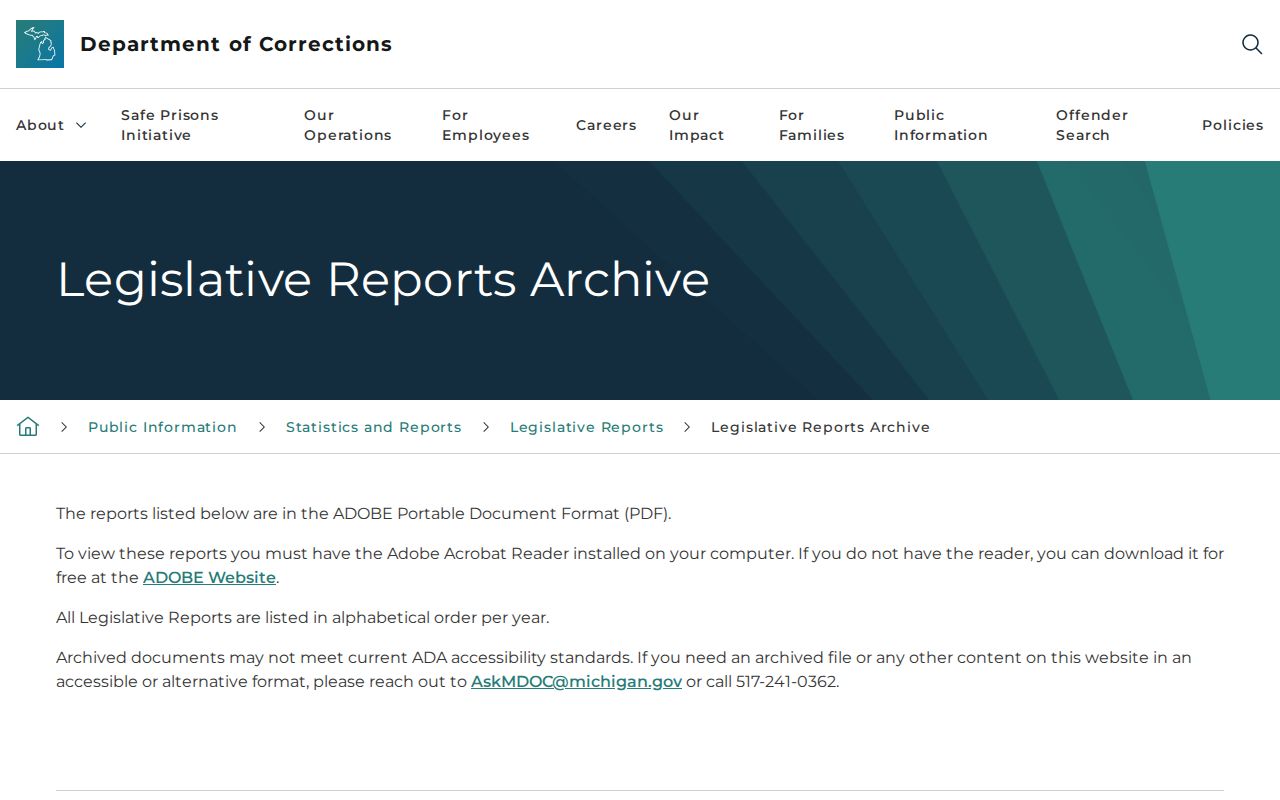
The archive is best read as dated statewide output, not a live release list.
Search Michigan Released Inmates
A statewide search works best as a custody-source check. Start with the strongest identifier available. Then compare the event date and legal status across the proper agency records. Do not treat a no-result as release. It may reflect spelling, a county-only sentence, delayed data, a transfer, a set-aside, an older discharge outside OTIS, or a case held by another sovereign.
- Search OTIS when the person served a Michigan prison sentence or may be on MDOC parole or felony probation.
- Use the county sheriff’s release record when the person was held only in a local jail.
- Check the sentencing court docket for the bond, dismissal, sentence, probation, or other order behind the event.
- Use BOP for federal imprisonment and ICE for current or very recent immigration detention.
- Request the underlying record when the online result is missing, old, unclear, or insufficient.
Search check: Match the agency number, name or aliases, age details, court file, sentencing county, offense, status, and event date before accepting a result.
MDOC Search for Michigan Releases
The six-digit MDOC number is the strongest OTIS input. Without it, search a last name with a first name or initial, then refine by fields the form supports. Former names and aliases can matter. For someone believed to have finished MDOC control, include the discharged status rather than searching active prisoners alone. The public result must still be matched to the right person.
Read `PAROLE`, `PROBATION`, and `DISCHRG` precisely. `PAROLE` means the person left prison but remains under MDOC custody. `PROBATION` describes community supervision and may not follow state prison. `DISCHRG` marks the end of MDOC jurisdiction for the listed sentence. Date Paroled and Date Discharged can be years apart, so they should never be merged into one generic release date.
The live OTIS offender search displays the identity and status inputs used for a Michigan released inmate lookup.
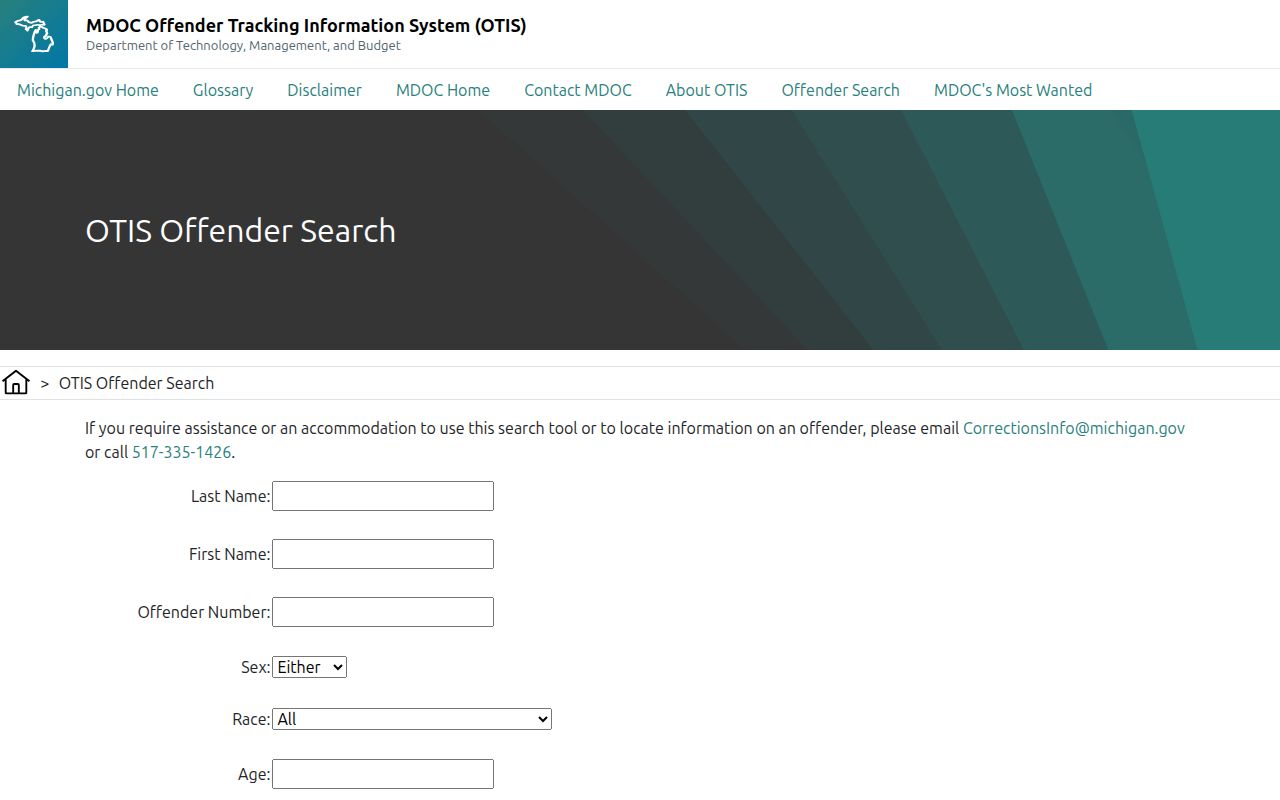
The status control is vital when a search concerns discharge rather than current imprisonment.
For a deeper explanation of fields and exclusions, use the MDOC offender search resource.
Michigan County Release Routes Vary
Michigan has no single county-jail release database. Each physical jail and sheriff keeps its own records. Several counties also rely on a neighboring institution rather than operating a conventional overnight jail. Alcona detainees may be housed in Iosco, Oscoda relies on Roscommon, Kalkaska uses Wexford, Montmorency relies on Alpena, and Luce may use Alger. A facility should not be counted once for every county it serves.
This cross-county pattern changes the lookup. The arrest county, sentencing court, physical jail, and records custodian may not all share one name. Begin with the booking agency, then identify the jail that actually held the person. Request the exit record from that custodian. If the exit was a transfer, follow the receiving agency instead of describing it as release to the community.
Note: Juvenile custody information is often confidential and should be routed through the court, agency, counsel, or another authorized channel.
MiCOURT Checks Michigan Release Orders
MiCOURT Case Search is statewide in name but multi-court in operation. A user first chooses a participating court. Some courts use a seven-year criminal-sentence display filter, and confidential matters are excluded or restricted. The portal can reveal the order behind a county release, such as bond, dismissal, sentencing, probation, or judgment, but it is not a sheriff’s physical release log.
Pair a docket with the agency record. Use the sheriff record for a jail exit, OTIS for MDOC custody, BOP for a federal sentence, or ICE for immigration detention. If the relevant court is missing or its online detail is thin, the Michigan Trial Court Directory identifies the court and clerk route. A court order and the time a jail completes release processing may differ.
The MiCOURT Case Search portal shows the participating-court selector that defines the first step.
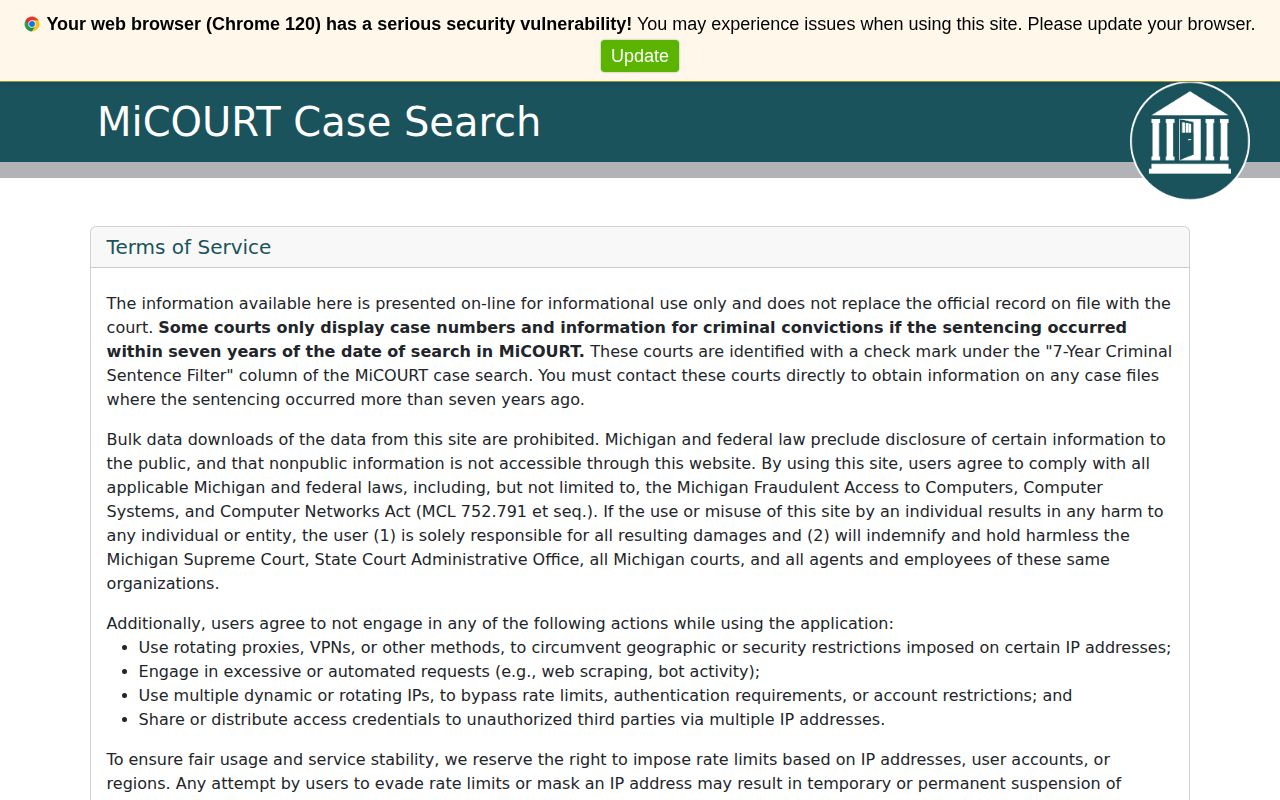
Its court-by-court design is why a blank result is not a statewide finding.
Michigan Supervision After Release
OTIS is also the first public check for current state parole or felony probation. A matching record ordinarily shows a supervision location. That location can be traced through MDOC’s regional field-office structure. An incorrect absconder notation should be raised with the supervising office, while a court-derived sentence error belongs with the sentencing court.
A parole grant and physical release are separate milestones. After a positive decision, the Parole Release Unit records the decision, term, special conditions, placement, and release work. A prosecutor from the committing county or the victim may have an appeal route under the governing process. The final Date Paroled is stronger evidence of departure than the grant date alone.
The Michigan Parole Board information page explains the Board’s authority and decision process.
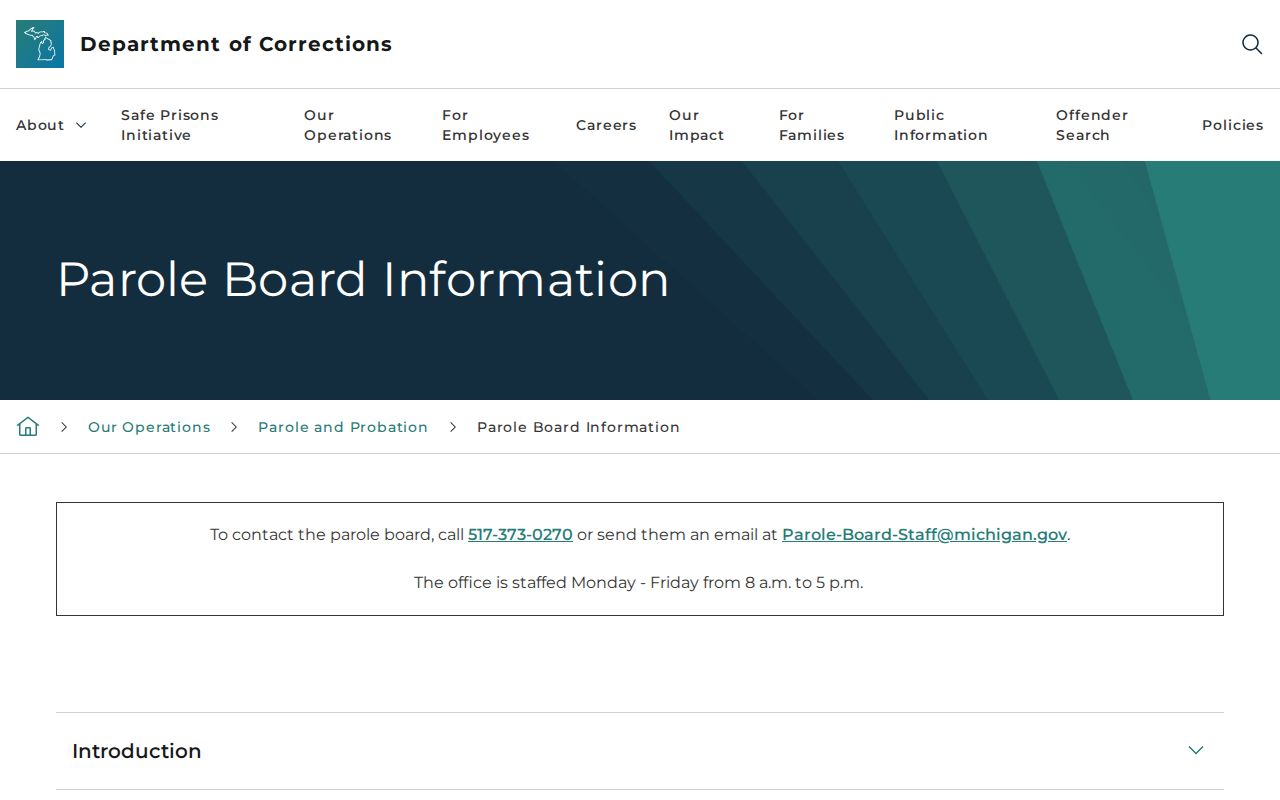
The Board decides parole, while OTIS and release processing show whether and when custody status changed.
Michigan Release Alerts and BOP
MI-VINE searches participating custody systems and can offer event notices by phone, text, email, app, or TTY. A phone registration uses a four-digit PIN to acknowledge an alert. Email and text registration do not use that PIN. Coverage should not be assumed for every county jail. General VINELink registration is also distinct from fuller MDOC Crime Victim Services notices available to eligible direct victims.
The Michigan VINELink search provides the person-search and notification entry point.

A VINE alert is timely notice, not a certified release record or proof that all supervision ended.
Federal prison cases belong in the BOP Inmate Locator. It accepts BOP, FBI, DCDC, or INS identifiers, or an exact name with optional refinements, and covers federal inmates released after 1982. Results may show a release date, `RELEASED`, or “Not in BOP Custody.” Those labels only describe BOP custody and do not rule out supervision or another agency’s hold.
The BOP Inmate Locator displays the federal search channels and released-result format.
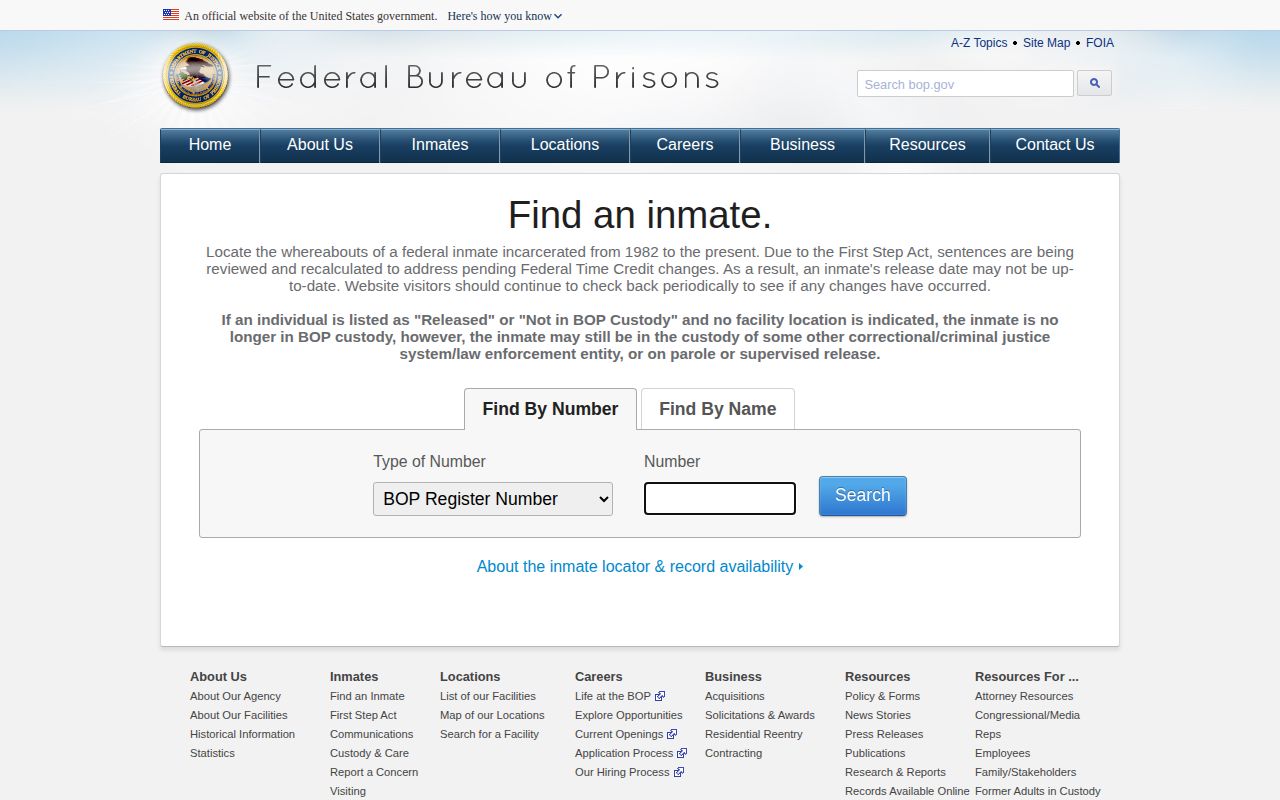
BOP says its locator data is extracted daily, so it remains separate from Michigan county and MDOC systems.
ICE Release Checks in Michigan
ICE uses its own Online Detainee Locator System. Search by a nine-digit A-number and country of birth, or by exact full name, date of birth, and country of birth. ICE states that the system includes currently detained adults and people released from ICE custody within the preceding 60 days. Juveniles, sensitive cases, old events, and records not yet uploaded may not appear.
A county jail exit to ICE is a transfer. It is not community release. Likewise, release from ICE detention may be followed by a field-office check-in or immigration-court obligations. Historical immigration custody records require ICE FOIA. A blank locator result cannot prove that detention never occurred or that an immigration matter is closed.
Michigan Custody and Release Sources
The correct source follows the operator and the event. A current roster answers who appears held now. A release record answers how and when one agency’s custody ended. A court docket supplies legal context. Where two systems conflict, seek the underlying record and ask the agency that created the disputed field.
| Source | Best use | Key limit |
|---|---|---|
| County jail roster | Current local custody | Released people usually drop off |
| County release record | Local exit time, reason, and destination when public | One sheriff or jail system at a time |
| OTIS | MDOC prison, parole, probation, and recent discharge | No jail-only cases; three-year post-discharge window |
| MiCOURT | Participating-court order and case context | Not the physical jail log |
| VINELink | Participating-system status and alerts | Not certified proof; coverage and timing vary |
| BOP or ICE | Federal prison or immigration custody | Does not describe all other custody or supervision |
Note: Confirm the event with the office that created the record when dates, identity fields, or custody labels do not align.